by Eric Hod | Design Manager, Hudson’s Furniture
Simple Care Tips to Keep Your Furniture Looking Its Best
Your furniture represents more than just functional pieces in your home. It’s the dining table where your family gathers for dinner, the sofa where you unwind after a long day, the bedroom set that helps you rest and recharge. With the right care, these pieces can last for decades, sometimes long enough to get passed down to the next generation.
Americans throw away more than 12 million tons of furniture every year, and over 80% ends up in landfills, according to the U.S. Environmental Protection Agency. Much of that disposal happens earlier than it needs to, driven by avoidable damage rather than actual wear. With proper care, you protect your investment, save on replacement costs down the road, and cut down on waste
At a Glance
Regular care extends furniture’s life for decades and protects your investment. Dust weekly, blot spills immediately, and keep pieces away from direct sunlight and heat sources. Condition leather every one to three months, polish wood monthly to quarterly, and maintain 40–60% humidity to prevent cracking, warping, and fading.
Why Furniture Care Matters
Furniture care works a lot like car maintenance. Skip the oil changes for a few years, and you can’t expect the engine to run the way it should. Furniture is the same: skip regular care and even well-made pieces start to show it. The average household spends $10,000 to $60,000 furnishing a home, often more for quality pieces built to last, so protecting that investment is worth the small amount of ongoing effort it takes.
There’s a health angle too. Dust that accumulates on upholstery can aggravate allergies, and dry leather cracks and can harbor bacteria. Regular cleaning and conditioning keep your pieces hygienic for your family, not just good-looking.
Understanding Your Furniture Materials
Different materials react differently to cleaning products, humidity, temperature, and daily use. Using the wrong approach, the wrong cleaner, the wrong cloth, or even the wrong cleaning motion can cause irreversible damage. Before you develop a care routine, take a few minutes to identify what your furniture is actually made of and how it’s finished.
Wood
Wood is a living material that responds to its environment, expanding and contracting as humidity and temperature shift throughout the year. That’s why consistent indoor conditions matter more for wood than almost any other material. Oak is dense and holds up well to daily use, while pine is softer and dents more easily under the same conditions. Mahogany and cherry develop a rich patina over time when they’re cared for properly, one of the reasons antique pieces in these woods often look better with age rather than worse.
The finish on your piece determines how you should clean it. Lacquered, polyurethane, and shellac finishes create a protective barrier that’s fairly forgiving to maintain. Oil finishes soak into the wood itself and need periodic reapplication to stay protective. Waxed finishes give a soft, warm sheen but need more frequent attention than the others.
Leather
Leather furniture falls into four grades, ranked from most to least durable. Full-grain leather is the unaltered top layer of the hide, keeping every natural scar and grain pattern, and it’s the most durable and expensive grade. Top-grain leather starts from that same layer but gets sanded smooth and finished, trading some natural character for a more consistent look and better stain resistance at a lower cost. Genuine leather comes from a lower hide layer and wears out faster than either grade above it, while bonded leather isn’t a single hide at all; it’s leftover scraps bonded to a fabric backing, and it’s the least durable option by a wide margin.
Most furniture uses top-grain leather for exactly this balance of durability, consistent appearance, and manageable price. For a full breakdown of what separates each grade and how to spot genuine quality on the showroom floor, see our guide on top-grain leather.

Fabric
Upholstery generally falls into three categories: natural fabrics like cotton, wool, and linen; synthetics like polyester and microfiber; and blends that combine properties of both. Natural fabrics feel luxurious and breathe well, but they usually need more careful handling and cleaning. Synthetics tend to hold up better to daily wear and clean up easier, though they can pill or fade over time. Performance fabrics represent the newer end of textile technology, built specifically to resist stains and wear while still feeling soft and looking good.

Understanding Upholstery Cleaning Codes
Cleaning codes appear on small tags, usually found under cushions or beneath the frame of the piece. Using the wrong cleaning method for your fabric’s code can shrink it, bleed the color, or cause damage you can’t reverse.
| Code | Meaning | What to Use | What to Avoid |
|---|---|---|---|
| W | Water-Based | Water-based cleaners, foam upholstery shampoo | Solvent cleaners |
| S | Solvent Only | Dry-cleaning solvents, water-free cleaners | Any water or water-based products |
| WS or SW | Water or Solvent | Either water-based or solvent-based cleaners | May need professional help for best results |
| X | Vacuum Only | Vacuum cleaner, soft brush | Any liquid cleaners or water |
If you can’t find a cleaning tag on your furniture, check the manufacturer’s website or contact the retailer where you purchased it. When in doubt, always test any cleaning solution on a small, hidden area first and wait for it to dry completely before proceeding with the rest of the piece.
How Humidity, Sunlight, & Heat Affect Furniture
The environment where your furniture lives affects its longevity as much as how you clean it. Temperature fluctuations, humidity levels, and light exposure can all cause significant damage over time. Understanding and controlling these factors is essential for proper furniture care.
Humidity
Dry air pulls moisture out of wood, causing cracks, splits, and joints that loosen over time. It does something similar to leather, drawing out moisture until the hide turns stiff and eventually cracks. High humidity works the opposite direction: it swells wood until drawers stick and doors won’t close right, and it encourages mildew growth in leather and upholstery alike.
How to Mitigate Humidity:
Maintain relative humidity between 40% and 60%, with temperatures between 68°F and 74°F. During winter months when heating systems dry out indoor air, run a humidifier to maintain optimal levels. In humid climates or during summer, use a dehumidifier to prevent excess moisture damage.
Sunlight/UV Rays
UV rays break down the compounds that give wood its color, causing fading first and then dryness and cracking as exposure continues. Leather fades unevenly under the same exposure and loses its natural oils, leaving the surface stiff. Fabric bleaches and weakens under UV light, with natural fibers like cotton and linen fading fastest of all.
How to Mitigate Sunlight:
Keep furniture out of direct sun during peak hours, roughly 10 a.m. to 4 p.m., and use UV-filtering window film or curtains to cut down exposure significantly. Rotating cushions and pillows every few months also helps distribute the wear evenly instead of concentrating it in one spot.
Heat
Concentrated dry heat pulls moisture out of wood and leather fast, faster than either material can adjust to, which leads to warping, cracking, and joints that loosen as the wood shrinks. Fabric fibers weaken under the same conditions, and dyes can fade or shift color
How to Mitigate Heat:
Keep all furniture at least 12″ away from radiators, fireplaces, and heating vents. If your furniture sits directly under or in front of an air conditioning vent, use deflectors to redirect airflow. Don’t stack heat-generating electronics like gaming consoles or cable boxes directly on wood furniture, and ensure they have proper ventilation to prevent concentrated heat damage.

How to Clean & Care for Wood Furniture
Wood furniture needs daily protection from scratches and moisture, weekly dusting with the grain, and monthly to quarterly polishing depending on use. Wood is a living material that expands and contracts with its environment, so consistent care matters more here than with almost any other material in your home.
Daily Habits That Protect Wood Furniture
- Use coasters and trivets under drinks and hot dishes. Water rings and heat marks are two of the hardest types of damage to repair, and they often show up faster than people expect.
- Lift items instead of dragging them across the surface to avoid scratches, including books, laptops, and dishes.
- Use felt pads under lamps, vases, and other objects that shift or vibrate over time.
- Blot spills immediately with a dry cloth. Wiping spreads the liquid before it has a chance to absorb.
How to Clean Wood Furniture Weekly
Dust wood furniture with a soft cloth or lamb’s wool duster, wiping with the grain to avoid micro-scratches. For light cleaning, use a cloth barely dampened with warm water, wrung out well, then dry immediately with a separate cloth so no moisture sits on the surface. For sticky residue that water alone won’t remove, add a drop of mild dish soap, clean gently, then follow with a plain water cloth and a dry cloth to remove any soap film left behind.
How Often to Polish Wood Furniture
Polish high-use pieces like dining tables and desks monthly, since daily contact wears down the finish fastest on these surfaces. Polish moderate-use pieces like dressers and nightstands every two to three months. Polish low-use pieces like display cabinets and accent tables two to four times a year, enough to keep them looking their best without unnecessary effort.
To polish, apply a small amount of wax or spray polish to a soft cloth rather than directly to the wood, then work with the grain using light, even strokes before buffing with a clean cloth. Wax lasts longer and builds a harder protective layer, though it takes more effort to apply. Spray polish works well for quick touch-ups but needs more frequent reapplication to offer the same protection.
How to Clean & Condition Leather Furniture
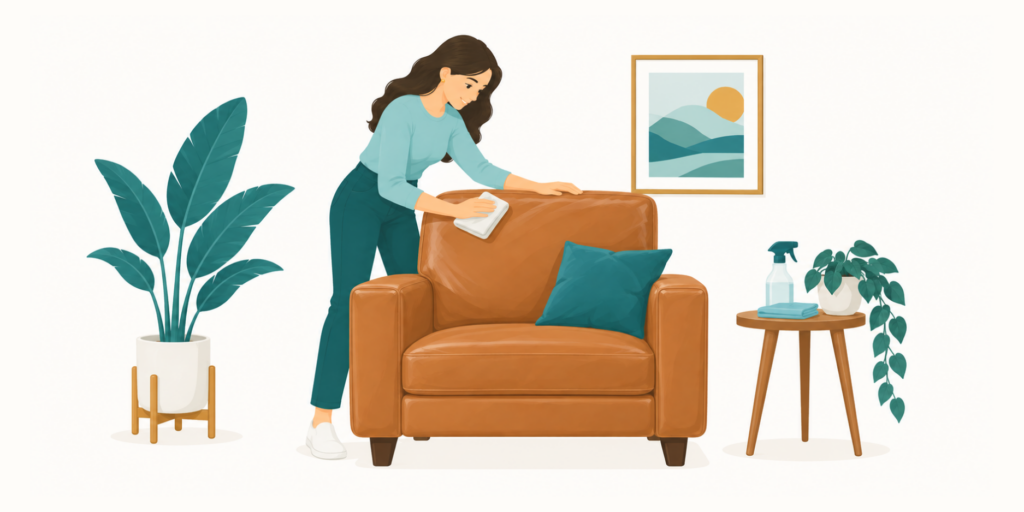
Leather furniture needs weekly dusting and periodic conditioning, ranging from monthly to every few months depending on your climate and how much the piece gets used. Leather holds up well with relatively little effort, but skipping conditioning for too long lets it dry out faster than most people realize.
How to Clean Leather Furniture Weekly
Dust leather with a soft, dry cloth or a vacuum with a soft brush attachment to keep dirt from scratching the surface or working into the grain. For light cleaning, use a cloth slightly dampened with mild leather soap, wipe gently, then buff dry right away so no moisture lingers on the hide.
How Often to Condition Leather Furniture
- High-use pieces in dry climates: monthly, since heat and dry air pull moisture out fastest
- Moderate-use pieces in typical climates: every two to three months
- Low-use or decorative pieces in humid climates: every three to four months, since humidity slows the drying process
Leather is skin, and like skin, it dries out as its natural oils diminish over time. To condition, clean the surface first, apply conditioner to a soft cloth, and work it in with gentle, circular motions using thin, even coats rather than one heavy application. Let it absorb for the time the product recommends, then buff away any excess. The leather may look slightly darker right after conditioning; it returns to its normal shade as it absorbs the product.

How to Clean & Maintain Upholstered Furniture
Upholstered furniture needs daily cushion care, weekly vacuuming, and immediate action on spills to prevent permanent staining. It works harder than almost any other piece in your home, absorbing dust, oils, and daily wear all at once, so consistent small habits matter more here than occasional deep cleaning.
Daily Habits That Protect Upholstery
- Keep pieces out of direct sunlight, since UV exposure fades fabric unevenly and creates visible light patches over time.
- Fluff and reshape cushions after use to redistribute the filling and prevent flat spots from becoming permanent.
How to Clean Upholstered Furniture Weekly
- Rotate and flip cushions to even out wear and avoid lasting impressions in one spot.
- Vacuum with a soft brush attachment, focusing on crevices where crumbs and pet hair tend to collect.
- Check under and between cushions for coins, pens, or food before vacuuming, since these can scratch or stain the fabric.
How to Remove Stains from Upholstered Furniture
Blot the stain immediately with a clean cloth, working from the outside toward the center so it doesn’t spread. Check the fabric’s cleaning code and use the matching cleaner, testing it on a hidden area first and letting it dry completely before treating the full spot. Use white cloths rather than printed paper towels, since ink from patterned towels can transfer and create a second stain. Blot with clean water afterward to remove any leftover cleaner, then let the area air dry fully.
For tougher stains, a few household options work well before reaching for something stronger: club soda lifts most food and drink stains, equal parts white vinegar and water handles general stains, and baking soda sprinkled on the spot for about 20 minutes absorbs grease and odor before vacuuming it away.

How Often Should You Maintain Your Furniture
Furniture care breaks down into three intervals: weekly upkeep, monthly deep cleaning, and seasonal maintenance tied to the year’s changing humidity and sun exposure. Splitting care into small, regular tasks means small issues that get caught before they turn into repairs.
Weekly Maintenance (15 Minutes)
Weekly maintenance covers dusting all surfaces, vacuuming upholstery, and flipping and fluffing cushions. It’s quick enough to fit around a pot of coffee brewing, and it prevents the dust buildup and cushion wear that lead to bigger problems down the road.
Monthly Maintenance (30 Minutes)
Monthly maintenance means cleaning each material with the right products, checking for stains that need attention, and tightening any loose hardware. It’s also a good time to polish wood surfaces and check whether leather furniture needs conditioning.
Seasonal Maintenance (1 to 2 Hours)
Seasonal maintenance includes deep cleaning or scheduling a professional cleaning, conditioning wood and leather, and checking for repairs or touch-ups a piece might need. Many households schedule this alongside other seasonal home maintenance, since the timing overlaps naturally.
Seasonal Furniture Care Checklist
| Season | Key Tasks |
|---|---|
| Spring | Deep clean upholstery, condition leather, check for winter humidity damage, clean outdoor furniture before use, rotate cushions |
| Summer | Monitor humidity levels, protect from sun damage, clean air conditioning filters to reduce dust, apply fabric protector if needed |
| Fall | Prepare outdoor furniture for storage, polish wood before heating season, check for loose joints or hardware, deep clean before holiday guests |
| Winter | Use humidifiers to prevent wood drying, keep furniture away from heat sources, dust more frequently due to closed windows |
Common Furniture Care Mistakes to Avoid
A few common habits cause more furniture damage than everyday wear ever does, usually because they seem harmless in the moment.
Using the Wrong Cleaning Products
Silicone-based polishes create an impressive instant shine, but they build up over time and can make future refinishing difficult or even impossible. Wax-based polish nourishes wood without that buildup. All-purpose cleaners often contain ammonia or similar chemicals that strip finishes and dry out wood, so stick to products made specifically for the material. Bleach can permanently discolor fabric unless it’s labeled bleach-cleanable, even in small, diluted amounts.
Cleaning Habits That Cause Damage
The instinct to scrub at a spill is strong, but rubbing spreads the stain and pushes it deeper into the fibers instead of lifting it out. Blotting works better every time. Over-wetting upholstery, especially, can soak through to the padding and frame underneath, leading to mold, odors, or structural damage that’s harder to fix than the original stain. Skipping the hidden-area test feels like a time-saver, but dye variations and finish differences mean even the right product can occasionally cause an unexpected reaction.
Ignoring Sunlight & Humidity Damage
Sun damage often goes unnoticed until fading has already set in, so adjusting window treatments during peak hours protects furniture for years longer. Extreme dryness or excess humidity both affect wood in particular, which is why monitoring your home’s humidity year-round matters more than most people realize. Furniture placed directly on heated floors without insulation underneath can dry out and crack from the bottom up, damage that stays hidden until it’s already happened.

Find Furniture Built to Last at Hudson’s Furniture + Mattress
At Hudson’s Furniture, we believe your home deserves pieces that last. That’s why we curate collections of quality furniture built to withstand daily life and grow more beautiful with time. From solid wood dining tables that anchor family gatherings to leather sofas that age gracefully and performance upholstery that handles real life, we help you find pieces worth maintaining. Our knowledgeable design team can guide you through material options, answer care questions, and help you select furniture that fits both your style and your lifestyle, all for free!
Browse our entire store online or visit one of our Florida showrooms to explore our collections and discover furniture that’s designed to be loved for generations.
FAQs
How often should I polish wood furniture?
Polish wood furniture every 1-3 months, or whenever it starts looking dull. Over-polishing can cause sticky buildup, so use products sparingly and buff thoroughly.
Can I clean leather with baby wipes?
While convenient, baby wipes may contain chemicals that can damage leather over time. It’s better to use products specifically designed for leather care or a simple mixture of equal parts water and white vinegar.
Why are my wood drawers sticking?
Sticking drawers are typically caused by high humidity, which makes wood swell. Wait for drier conditions, or use a dehumidifier. If the problem persists in dry weather, the runners may need light sanding or waxing.
How do I get pet odors out of upholstery?
Sprinkle baking soda on the affected area, let it sit for at least 15 minutes (or overnight for stubborn odors), then vacuum thoroughly. For persistent odors, a solution of diluted white vinegar can help neutralize smells.
What’s the best way to remove water rings from wood?
For white water rings, try dabbing with a cloth dampened with equal parts vinegar and olive oil. For stubborn rings, apply non-gel toothpaste with a soft cloth, rub gently with the grain, then wipe clean and polish.
How can I prevent my furniture from fading?
Use window treatments to filter direct sunlight during peak hours, rotate furniture positions periodically so sun exposure is even, and consider UV-protective window films for rooms with significant sun exposure.
Should I use fabric protector on new furniture?
Fabric protector can be helpful, especially for light-colored fabrics or pieces that will see heavy use. However, some performance fabrics come with protection built in, so check with the manufacturer before applying additional products.
What humidity level should I maintain for furniture?
Maintain indoor relative humidity between 40% and 60% for optimal furniture preservation. This range prevents wood from cracking due to dryness while avoiding swelling and mold growth from excess moisture.