
by Eric Hod | Design Manager, Hudson’s Furniture
Discover a Storage Bed That Fits Your Room & Your Routine
A bed frame with storage adds a place to put things without adding an extra piece of furniture to the room. How much floor space that saves depends on the type: under-bed drawers and lift-up platforms use space the bed already occupies, while footboard and headboard storage add slightly to its footprint. The right pick comes down to your daily habits, what you plan to store, the size of your room, and what the extra storage is worth to you.
At a Glance
A kitchen hutch is a freestanding cabinet with open or glass-front shelving on top and closed storage on the bottom, used for displaying dishware and storing kitchen or dining essentials. It differs from a buffet, which includes only the lower cabinet without the upper display case. Choosing the right hutch depends on your available wall space, storage needs, and the style of your dining room. Standard hutches range from about 36″ to 72″ wide and 72″ to 84″ tall, so measuring your space before shopping helps narrow the options.
What Is a Bed Frame with Storage?
A bed frame with storage adds usable compartments to the frame itself, most commonly in the base, the footboard, or the headboard depending on the design. This provides storage space without needing to buy nightstands, separate dressers, or bins to slide under the bed. Built-in storage beds are most often used in smaller bedrooms, where the bed already claims the largest share of the floor and everything else competes for what remains.
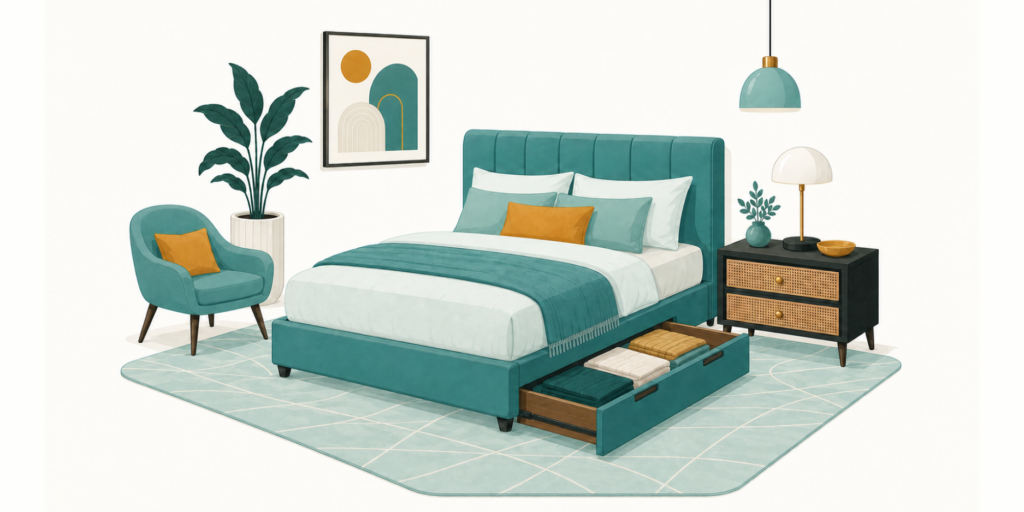
4 Common Types of Storage Beds & How Each One Works
Storage beds fall into four primary designs: lift-top platforms, under-bed drawers, footboard storage, and bookcase headboards. Picking the type of storage bed that meets your need depends on what you’re storing and how frequently you need to access it.
(1) Lift-Top Storage Beds
A lift-top bed, sometimes sold as a lift-up storage bed, hinges the entire mattress platform upward on pneumatic struts, the same way a pressurized-gas lift holds open the trunk of a car. The struts displace most of the mattress weight while being raised and hold the mattress aloft while accessing the compartment underneath. This style of opening allows full access to the whole area under the bed as one deep compartment, allowing you to store the most of any storage bed. This bed frame style is best when storing frequently unassessed seasonal items like clothing, spare bedding, and luggage. Unlike underbed drawers, the lift top mechanism requires zero additional floor space, making it ideal when the bed sits in a tight room with no clearance to pull out a drawer.
(2) Under-Bed Drawer Beds
Drawer beds build two to six drawers into the base of the frame, with drawer count following bed size. A full typically offers two while a king can carry up to six. Acting just like a dresser, these drawers slide out on glides or runners for quick access to everyday items like clothes and toys. They need clearance to open fully, so plan to leave floor space on whichever side the drawers sit. Many frames let you choose which side the drawers face during assembly, though some are fixed, so confirm this if one long side of the bed goes against a wall. Drawer depth also caps what fits, making these beds better suited to folded clothes and linens than to bulky comforters or luggage. Drawer beds offer somewhat less storage than lift-top designs because internal framing and bottom support panels block off part of the cavity beneath the mattress.
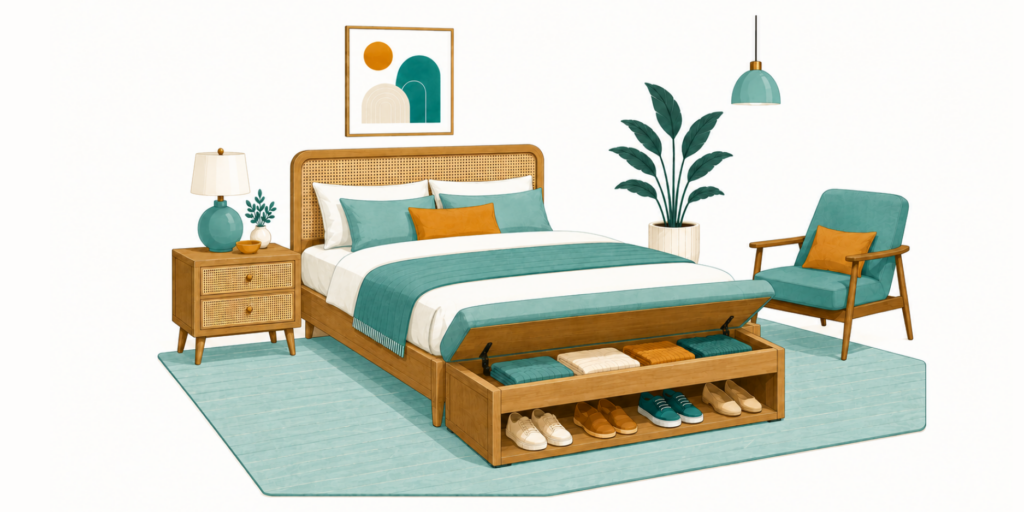
(3) Footboard Storage Beds
Footboard storage adds open shelves or a bench with a hinged or removable top at the foot of the bed. Bench versions double as a seat for putting on shoes, with the space under the lid holding fold-only items like sweaters, throws, and spare linens. Hinged lids stay attached and swing up, while removable tops lift off completely and need somewhere to rest while the bench is open. Anything sitting on the bench has to come off before the lid opens, so the space underneath suits seasonal items better than daily ones. Open shelves skip that step and stay reachable, which works well for shoes, bags, and shallow storage baskets. Either version adds length to the bed’s footprint, so measure the room front to back and leave standing room at the foot.
(4) Bookcase Headboard Beds
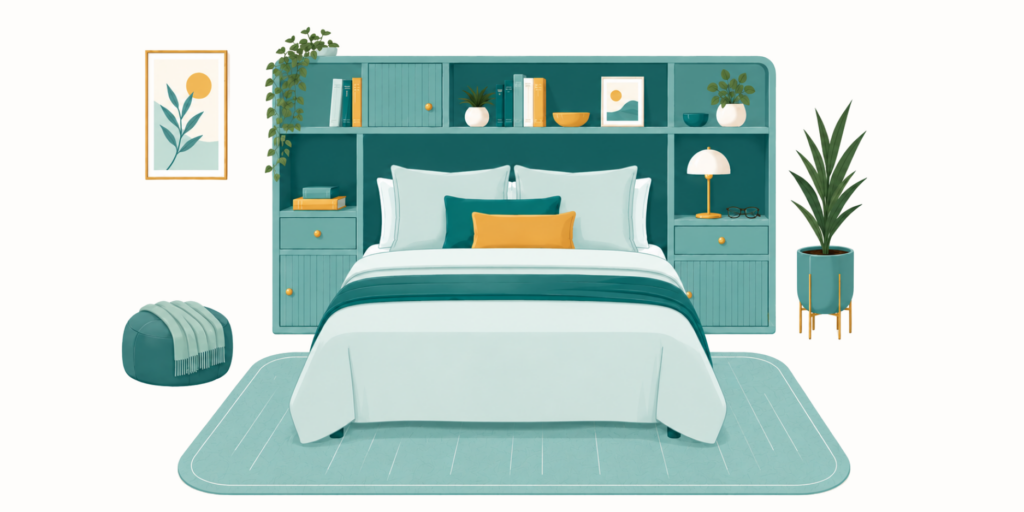
A bookcase headboard replaces a flat headboard with open shelves or small cabinets, giving you a spot for books, a lamp, glasses, and a phone without a separate nightstand. Keeping these items within arm’s reach is the main draw for anyone short on nightstand space or working with a narrow room. Shelves run shallow, so paperbacks, remotes, and phones fit while deeper items stick out past the edge. Some models build in outlets or USB ports, which saves running a lamp or charger cord around the frame. The headboard adds depth at the head of the bed, and a frame pairing one with footboard storage can run noticeably longer than a standard bed of the same mattress size. Many queen and king frames combine a bookcase headboard with drawers in the base, giving you shelf access up top and larger storage below.
Storage Bed Types Compared
| Storage Type | How You Access It | Holds Best | Capacity |
|---|---|---|---|
| Under-Bed Drawers | Slide out from the sides or foot | Folded clothes, sheets, kids’ toys | Moderate to high |
| Lift-Top | Whole platform lifts on pneumatic struts | Comforters, spare pillows, luggage | Highest |
| Footboard Storage | Open shelves or a lidded bench | Blankets, linens, bags | Low to moderate |
| Bookcase Headboard | Open shelves or small cabinets | Books, lamp, glasses, phone | Low, small items only |
How Storage Capacity Changes by Bed Size (Full, Queen, & King)
Storage capacity scales with the footprint of the bed, though the two main designs use that footprint differently. A lift-top opens the entire area beneath the mattress, so both width and length add to what fits. Drawer beds pull in from the sides, so width determines how deep each drawer runs while length determines how many fit along the frame. A full measures 54″ by 75″, a queen 60″ by 80″, and a king 76″ by 80″.
A full-size bed with storage typically carries two to three under-bed drawers. A lift-top full opens to roughly the space of a large storage tote, enough for a spare comforter, a sheet set, and a carry-on. Drawers at this size run narrow, so soft and compressible items like folded sweaters and linens fit better than anything bulky.
A queen bed frame with storage is the easiest size to shop, since manufacturers build storage designs in queen first and carry the widest range of finishes, mechanisms, and price points at that size. Queen drawer beds usually offer four drawers split across the sides and foot, which gives you enough separate compartments to keep bedding in one and clothes in another. A queen lift-top holds a full set of seasonal bedding with room left for off-season clothes.
A king bed frame with storage holds the most of any size, with a lift-top king taking multiple duvets, a stack of pillows, and full-size luggage at once. The 76″ width requires a center support rail running head to foot, which divides the space underneath in two. King drawer beds work with that division by running a separate bank of drawers from each side, so you gain drawer count but cannot slide anything the full width of the bed. Plan for about 20″ of pull-out clearance on whichever sides the drawers sit, since a king already occupies the largest footprint of any standard size.
California kings measure 72″ by 84″, trading 4″ of width for 4″ of length. The two sizes come out to nearly the same square footage, so a California king lift-top holds about what a standard king does, while its drawers run shallower because the frame is narrower. Fewer manufacturers build storage frames in California king, so confirm the design you want is offered in the size before committing to it.
Which Storage Bed Is Right for Your Room?
The best storage bed for you comes down to two questions: how much floor space surrounds the bed, and whether you are storing bulky items or everyday ones.
If your bed sits in a tight room with little floor to spare, a lift-top bed will work best, since the platform rises straight up instead of pulling out into the room. If you have open floor on at least one long side and want daily access to clothes, a drawer bed is the better everyday choice. Footboard and headboard storage add smaller amounts at the ends of the bed when you have room for the extra length.
The chart below matches common situations to the storage type that handles them best.
A storage bed makes sense if you:
- Live in a smaller bedroom where a dresser would crowd the floor
- Need seasonal or overflow storage but have limited closet space
- Share a room and want each person’s items contained near the bed
- Want to skip a nightstand or reduce the furniture in the room
Which Storage Bed Fits Your Situation
| Your Situation | Under-Bed Drawers | Lift-Top | Footboard Storage | Bookcase Headboard |
|---|---|---|---|---|
| Everyday clothes | ✓ | |||
| Seasonal clothes & bedding | ✓ | |||
| No room to open drawers | ✓ | |||
| A side against a wall | ✓ | ✓ | ✓ | |
| A bench seat at the foot | ✓ | |||
| Books & a lamp by the bed | ✓ |
Is a Storage Bed Worth the Extra Cost?
A storage bed costs more than a plain frame of the same size, since drawers, hardware, and reinforced framing all add material to the build. Metal frames with basic drawers sit at the low end of the price spectrum, while a solid wood drawer bed costs more, and a pneumatic lift-top bed runs the highest because of the hardware carrying the platform. The size of the bed also raises the price at every tier, meaning a king storage bed will cost more than a queen storage bed in the same style and finish.
That additional cost makes the most sense when the bed with additional storage capacity replaces pieces of furniture you would otherwise have to buy, like a dresser or a pair of nightstands. Skipping those additional purchases often evens out much of the difference while also freeing the floor space the other piece would have taken.
Measurements to Check Before Buying a Storage Bed
Storage frames run larger than the mattress they hold, so measure against the assembled dimensions listed on the spec sheet rather than the mattress size. A bookcase headboard adds depth at the head, and footboard storage adds length at the foot, meaning a queen carrying both can measure closer to 90″ long than the 80″ of its mattress. Mark those dimensions on the floor with painter’s tape so you can walk the footprint before committing to it.
Under-bed drawers run 16″ to 20″ deep and need to open completely to reach what sits at the back. Measure from the side of the bed out to the nearest wall, dresser, or door swing, and look for roughly 30″, which covers the drawer plus standing room in front of it. Many frames let you choose which side the drawers face during assembly, so if only one side of the room offers that clearance, confirm the frame can be built to open toward it.
Footboard storage needs the same kind of access at the end of the bed. A bench lid or a set of open shelves has to be reachable while standing, so leave a walking path at the foot rather than pushing the frame against the wall.
Lift-top beds require no floor clearance, but they do need open wall above the headboard. The platform hinges at the head and swings up at a steep angle, so measure from the top of the headboard to the ceiling and keep that wall free of mirrors, shelves, and hanging art. A sloped ceiling or a window on the headboard wall will usually rule out the design, which is worth checking first if the room has either.
Find the Right Storage Bed at Hudson’s Furniture + Mattress
The right storage bed clears the floor of everything you were keeping out in the open, and it does it without adding a single piece of furniture to the room. When you’re ready to compare, browse our lift-top beds, drawer beds, and bookcase headboards online at your own pace, or visit a Hudson’s Furniture + Mattress showroom and let our design specialists match a frame to your exact floor plan.
FAQs
What is a bed frame with storage?
It is a bed frame with built-in compartments in the base, footboard, or headboard, so you get storage without a separate dresser or under-bed bins. The most common designs are under-bed drawers, lift-top platforms, footboard storage, and bookcase headboards.
Which type of storage bed holds the most?
Lift-top beds hold the most, since the whole mattress platform raises to open the entire area underneath as one deep compartment. This makes them best for bulky, seasonal items like comforters and luggage rather than daily-use belongings.
Do storage beds need a box spring?
Most do not. Storage beds use a slatted or solid platform base that supports foam, hybrid, and most innerspring mattresses on their own. Adding a box spring raises the sleep height and shrinks the storage space, so it usually works against the point of the bed.
Is a queen bed frame with storage worth it?
A queen storage bed is worth it if you want extra storage without adding furniture, and queen is the size most storage designs are built for first, so you get the widest selection. A queen lift-top fits a full set of seasonal bedding, and queen drawer beds typically offer four drawers.
How much floor space do you need for a storage bed with drawers?
Leave clearance equal to at least the depth of the drawer on whichever side it pulls out, so it can open fully. Beds with drawers on the foot instead of the sides work in rooms where the bed sits close to a wall.
Can you put any mattress on a storage bed?
Most storage beds accept foam, hybrid, and innerspring mattresses on a slatted or platform base. Check the slat spacing for foam and hybrid mattresses, since wide gaps can leave them under-supported. A design specialist can confirm the base type a specific frame uses.
Are lift-top storage beds hard to open?
No. Pneumatic struts carry the weight of the platform, so it lifts with light effort even when the storage space is full. You do need to clear anything off the top of the bed before raising it.
What is the difference between a drawer bed and a lift-top bed?
Drawer beds have drawers that slide out from the sides or foot for quick daily access to smaller spaces. A lift-top bed raises the whole mattress platform to open one large compartment underneath, which holds more but takes more effort to reach. Drawer beds suit everyday clothes, and lift-top beds suit seasonal bulk.
Do storage beds come in king size?
Yes. A king bed frame with storage gives the largest capacity of any size, and king lift-top beds hold bulky duvets and luggage easily. Plan for walking space around three sides so side drawers open and the platform lifts.
Does a bookcase headboard replace a nightstand?
It can. A bookcase headboard adds shelves or small cabinets for books, a lamp, and a phone within arm’s reach, which removes the need for a nightstand in tight rooms. The shelves are shallow and meant for small items rather than bulk storage.
Can you use storage beds for kids’ rooms?
Yes. Drawer beds suit kids’ rooms well, since the drawers hold clothes and toys and open at a height children can reach. A full-size storage bed fits most kids’ and guest rooms without crowding the floor.
Do storage beds get moldy or trap moisture?
They can if the base has no airflow and the compartment stays packed full, since the space under a mattress runs warmer and more humid than the room. A slatted or vented platform base, some breathing room in the compartment, and dry contents keep it from happening. Keep electronics, documents, and anything damp out of the storage space.