
by Eric Hod | Design Manager, Hudson’s Furniture
The Simple Habits for Keeping Leather Soft & Supple
How to clean leather furniture properly is less about hard work and more about consistency. Leather stands apart from most upholstery materials because it actually improves with age, softening at the seams and deepening in color the longer you own it. It only happens with the right kind of care, and skipping it lets the same material dry out and crack well before its time. None of it demands special skill or expensive products, just a few simple habits done consistently. Those habits are what turn a leather sofa into furniture getting better every year instead of merely holding steady.
At A Glance
Clean leather furniture with a soft cloth, mild soap, or a pH-balanced leather cleaner, and skip bleach, ammonia, alcohol, and all-purpose wipes entirely. Dust weekly, wipe down monthly, and condition every 6 to 12 months to prevent cracking. Blot spills right away instead of rubbing them, and keep leather furniture away from direct sunlight and heating vents.
How to Read Your Leather Furniture’s Care Code
Before you start cleaning, look for a small tag sewn into the underside of a cushion or stapled to the bottom of your furniture’s frame. This tag is the manufacturer’s care card and cleaning guidelines, listing the exact materials used to build your piece. It also spells out which products are safe to use and which ones to avoid.
Leather finishes vary more than most people realize. Every hide gets treated after tanning, since raw leather absorbs stains unevenly, shows natural scars and marks, and reacts differently depending on humidity and use. Manufacturers apply a protective topcoat, dye, or wax to guard the surface, even out color, and give the hide its finished texture and sheen. Stripping the finish away, even by accident with the wrong cleaner, exposes the raw hide underneath and can permanently change how the leather looks and feels.
To understand what products to use, you first need to dicpher the the care card. Most care cards use a four letters cypher: W for water-based cleaners, S for solvent-based cleaners, WS for either, and X for vacuum or brush only. If the original tag is missing or unreadable, check the product listing or paperwork from your purchase, since retailers typically pull the same code from the manufacturer’s specs. Without either of those on hand, default to the gentlest method available: a soft, barely damp cloth with mild soap, tested first in a hidden spot.
Understanding Your Leather’s Care Code
| Code | What It Means | How to Clean It |
|---|---|---|
| W | Safe for water-based cleaning products | Use a mild soap and water solution or a water-based leather cleaner on a barely damp cloth |
| S | Solvent-based cleaners only, no water | Use a solvent-based leather cleaner. Water can leave spots or rings on this leather |
| WS | Safe for both water and solvent-based products | A mild soap and water solution or a solvent-based cleaner both work well here |
| X | Vacuum or brush only, no liquid cleaners | Skip liquid products entirely. Call a professional leather cleaner for anything beyond dusting |
Supplies to Gather Before You Start Cleaning
A handful of simple supplies handle almost every leather cleaning job in a typical home, and chances are you already own more than half of them.
- 2-3 soft microfiber cloths
- A vacuum with a soft brush attachment
- A mild, pH-neutral soap (not dish soap), or a pH-balanced leather cleaner
- Distilled water
- A leather conditioner made for furniture-grade leather
- A soft-bristle brush for seams and crevices
Microfiber does more work than a regular towel. Its fine fibers lift dirt and oil without the coarse texture of terry cloth, which can create tiny scratches on some finishes over time.
Skip dish soap even though it looks like a similar option. Dish soap is formulated with degreasers strong enough to cut through cooking grease, and this same degreasing power strips away the natural oils a mild soap leaves alone. Stick with a pH-neutral soap made for skin, like castile soap, or a cleaner made specifically for furniture-grade leather.
Skip anything marketed for automotive leather, too. Furniture leather is finished differently than a car seat, and automotive products are often too harsh for it.
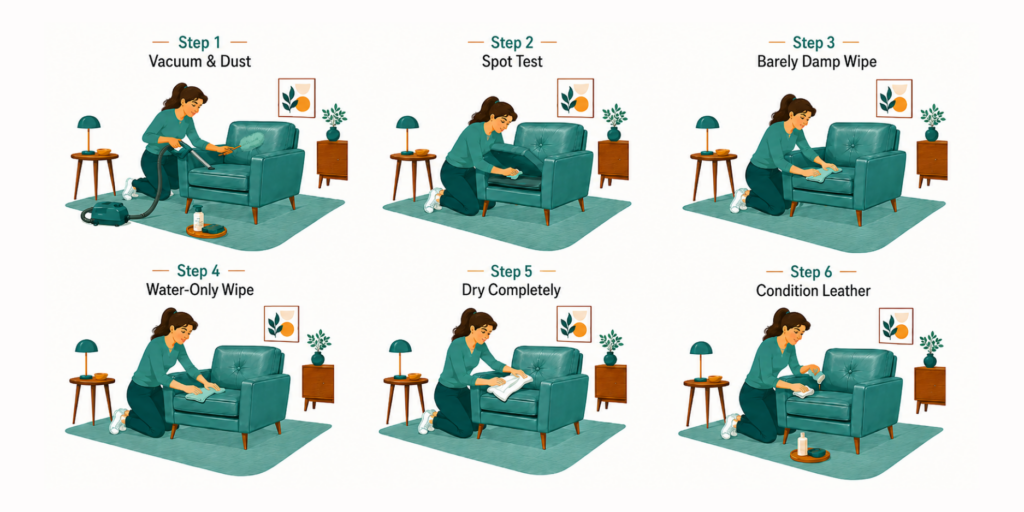
How to Properly Clean Leather Furniture
Cleaning leather furniture takes only six simple steps, and none of them require any special skill. It’s important to follow them in order, though, since skipping ahead can undo the work you just did. The whole process takes about 20 to 30 minutes for an average sofa, longer if you’re treating a stain or working on a larger sectional.
- Vacuum and dust first. Use the soft brush attachment to lift loose dirt and dust from the surface and seams. Dirt left in place acts like sandpaper once you introduce any moisture, so this step always comes before wiping.
- Test your cleaner in a hidden spot first. Apply a small amount to the underside of a cushion or the back of the piece, wait a few minutes, and confirm there’s no discoloration before moving to Step 3.
- Wipe down with a barely damp cloth. Dampen a microfiber cloth with your mild soap solution or leather cleaner, wring it out well, and wipe in small circular motions. The cloth should feel damp, not wet.
- Wipe again with a clean, water-only cloth. This removes soap residue left behind from Step 3 and prevents a dull or sticky film from forming as the leather dries.
- Dry the surface completely. Use a dry, soft towel to pat the leather dry rather than letting it air dry on its own. Trapped moisture between crevices and seams can lead to mildew over time.
- Condition once the leather is fully dry. Apply a leather conditioner made for furniture with a clean cloth, following the product’s instructions for how long to let it sit. Conditioning too soon, before Step 5 is complete, seals moisture under the surface instead of restoring it.
Household Products to Avoid on Leather Furniture
A short list of products causes most of the damage seen on leather sofas and chairs. Bleach and ammonia strip the dye and finish on contact, while alcohol-based products dry out the material and lead to cracking over time. Baby wipes and disinfecting wipes carry similar risk, since they’re built with chemicals meant for hard surfaces rather than natural hides. Vinegar shows up often in home remedies, and it does lift dirt in the short term. But its acidity works against leather’s natural oils the more you use it, so it’s worth skipping in favor of a cleaner made specifically for the material.
A few other products cause the same kind of damage even though they seem harmless enough for everyday cleaning.
Multi-surface sprays and dish soap often contain degreasers strong enough to strip leather’s natural oils, leaving the surface stiff after just one use. Magic erasers and other melamine sponges work by grinding away a microscopic layer of whatever they touch. It’s the same mechanism lifting stains from painted walls, and it’s what dulls or scratches a leather finish just as easily. Essential oil sprays and scented fabric fresheners cause less obvious harm. Most formulas use an alcohol carrier, which evaporates fast and pulls moisture out of the leather as it goes. The fragrance oils themselves behave more like solvents on a leather finish than the conditioning oils meant to soak in and replenish it.
What to Use & Avoid When Cleaning Leather
| Category | Use This | Avoid This |
|---|---|---|
| Cleaning Solution | ✓Mild soap and water, or a pH-balanced leather cleaner | Bleach, ammonia, alcohol, window cleaner, or vinegar |
| Wipes | ✓Soft microfiber cloth | Baby wipes, disinfecting wipes, or paper towels |
| Water Amount | ✓Barely damp cloth, wrung out well | Soaking or saturating the leather surface |
| Spills | ✓Blot immediately with a dry cloth | Rubbing or scrubbing the spill into the surface |
| Drying | ✓Air dry away from heat, then condition | Hair dryers, direct sun, or heating vents |
| Tools | ✓Vacuum with a soft brush attachment | Stiff brushes, scrub pads, or steam cleaners |
Removing Common Stains From Leather Furniture
Stains respond best to quick action and a gentle touch, so treat stain removal as its own step rather than part of your regular cleaning routine. Scrubbing a fresh stain the way you’d clean the rest of the piece often pushes it deeper into the material instead of lifting it out.
Water Spots & Rings
Water rarely stains leather on its own, but rings can form if a wet glass or damp towel sits on the surface too long. Let the spot air dry completely, away from direct heat, then condition the area once it’s dry. The ring usually fades as the surrounding leather reabsorbs its natural oils.
Oil & Grease Stains
Blot the spot with a dry cloth first to lift any excess oil sitting on the surface. Sprinkle cornstarch or unscented talcum powder directly on the stain, let it sit for several hours or overnight, then brush it away gently. The powder draws the oil out of the leather instead of pushing it in deeper.
Ink Stains
Ink is one of the few stains worth handing to a professional. DIY ink removers often rely on alcohol, and alcohol is exactly what damages leather’s finish. A leather-specific ink remover applied by a professional cleaner protects the surrounding material while still lifting the stain.
How Different Leather Types Affect Your Cleaning Routine
Leather furniture isn’t all built the same way, and the type you own determines how much upkeep it actually needs. Full-grain and top-grain leather hold up well to the cleaning steps above. Both are genuine hide with a durable, lightly finished surface, and both benefit most from regular conditioning. Aniline leather is dyed all the way through with no protective coating, making it the most absorbent of the group. It needs the most care around spills and sunlight as a result. Semi-aniline leather carries a light protective finish, adding some buffer against everyday wear.
Bonded leather is the exception. Made from ground leather scraps bonded with polyurethane, it wears more like a coated fabric than genuine hide, and standard leather conditioners can actually speed up its tendency to peel. Stick to a barely damp cloth and mild soap only, and skip conditioning oils on it entirely. If you’re not sure which type you’re working with, our guide How to Spot Well-Made Furniture breaks down what separates genuine hide from the look-alike materials before you buy.

How Often to Clean & Condition Leather Furniture
Weekly dusting and a monthly wipe-down keep dirt from building up between deeper cleanings. Conditioning is the step people skip most often, yet it’s what keeps leather from drying out and cracking well before its time. Most furniture-grade leather needs conditioning every 6 to 12 months. Homes in hot, dry, or sun-heavy rooms may need it closer to every 4 to 6 months, since heat pulls moisture out of the material faster.
Regular care pays off well beyond appearance. Leather conditioned on schedule consistently outlasts fabric and other upholstery materials, a comparison covered in more detail in our guide How Long Should a Quality Sofa Last?
Protecting Leather Furniture From Sun & Heat
Leather is one of the materials most affected by direct sunlight, more so than most fabric upholstery. Sunlight fades color unevenly and dries out the surface, speeding up cracking well before normal wear would cause it. Position leather sofas and chairs away from south-facing windows where possible, or use sheer curtains and blinds to filter the strongest afternoon light.
Heat sources cause the same kind of damage. Keep leather furniture a few feet from air conditioning vents, space heaters, and fireplaces, since blowing air and radiant heat both pull moisture from the surface. A room with steady humidity, rather than one swinging between very dry and very damp, is the easiest environment for leather to hold up in over the long run.
Leather isn’t the only material benefiting from this kind of attention, and our guide Furniture Care 101 covers wood, fabric, and metal with the same level of detail.
Find Quality Leather Furniture at Hudson’s Furniture + Mattress
Leather furniture rewards a little routine care with decades of use, and you now have the exact steps needed to care for it with confidence. Hudson’s carries leather sofas, leather sectionals, and leather recliners built from genuine hides, which only look better with age when cared for the right way.
A well-cared-for leather sofa only gets more comfortable and more beautiful with time, developing a kind of character no brand-new piece can match yet. Browse Hudson’s leather collection online to compare grains, colors, and configurations at your own pace. Or visit a Hudson’s Furniture + Mattress showroom and let our design specialists show you the difference genuine, well-finished leather feels like in person. Your next leather sofa is ready to become a piece your family uses and loves for years.
FAQs
What is the best way to clean leather furniture?
Vacuum the surface with a soft brush attachment, wipe it down with a barely damp cloth and a mild, pH-neutral soap or a pH-balanced leather cleaner, then wipe again with a clean water-only cloth. Dry the leather completely before applying a furniture-grade leather conditioner. This order prevents soap residue and trapped moisture, the two most common causes of a dull or sticky finish.
Can I use baby wipes on leather furniture?
No. Baby wipes contain alcohol and fragrance chemicals built for skin and hard surfaces, and both dry out leather’s finish over repeated use. Stick to a soft microfiber cloth with mild soap and water or a leather-specific cleaner instead.
What household products should never touch leather furniture?
Bleach, ammonia, alcohol-based cleaners, window cleaner, and vinegar all damage leather’s dye and finish, even though several show up in DIY cleaning advice. Dish soap, multi-surface sprays, and magic erasers cause similar harm, since their degreasers and abrasives are made for hard surfaces rather than natural hide. A pH-balanced leather cleaner or a mild, pH-neutral soap avoids all of these risks.
How often should I condition my leather sofa?
Most furniture-grade leather needs conditioning every 6 to 12 months. Homes in hot, sunny, or dry rooms often need conditioning closer to every 4 to 6 months, since heat and light pull moisture out faster than normal indoor conditions.
How do I get water stains out of leather furniture?
Let the spot air dry away from direct heat rather than wiping it while wet, then condition the area once it’s fully dry. Most water rings fade on their own as the surrounding leather reabsorbs its natural oils during conditioning.
How do I remove oil stains from a leather couch?
Blot excess oil with a dry cloth, then sprinkle cornstarch or unscented talcum powder over the stain and let it sit for several hours or overnight. Brush the powder away gently once it has drawn the oil out of the leather.
Can I use vinegar to clean leather furniture?
It’s best to avoid it. Vinegar lifts surface dirt in the short term, but its acidity works against leather’s natural oils over repeated use and can leave the material drier and more prone to cracking. A pH-balanced leather cleaner cleans just as well without the risk.
Does bonded leather clean the same way as genuine leather?
Not entirely. Bonded leather is made from ground leather scraps bonded with polyurethane, and standard leather conditioners can speed up the peeling this material already tends toward. Clean bonded leather with a barely damp cloth and mild soap only, and skip conditioning oils.
How do I know what kind of leather my furniture has?
Check the manufacturer’s tag or original product listing, which usually names the leather type directly. Full-grain and top-grain leather feel supple with visible natural grain, aniline leather feels soft and absorbs liquid quickly, and bonded leather has a more uniform, slightly plastic-like surface.
Can direct sunlight damage leather furniture?
Yes. Sunlight fades leather unevenly and dries out the surface, speeding up cracking well before normal wear would cause it. Position leather furniture away from south-facing windows, or filter strong afternoon light with curtains or blinds.
Is it safe to clean leather furniture with a steam cleaner?
No. The combination of heat and moisture from a steam cleaner can warp, discolor, or crack leather’s finish, especially on aniline or lightly finished leathers. Stick to a barely damp cloth for routine cleaning and leave deep cleaning to a leather care professional.
What should I do if my leather furniture cracks?
Stop using household cleaners on the area and apply a leather conditioner to slow further drying. Small cracks can sometimes be treated with a leather repair kit made for furniture-grade leather, but larger cracks usually need a professional repair service.