
by Eric Hod | Design Manager, Hudson’s Furniture
Why One Cleaning Method Doesn’t Work for Every Material
Most people rarely think there’s a correct way to clean outdoor patio furniture. The thinking goes that outdoor furniture already lives outside, exposed to rain and sun, collecting pollen and dirt with every passing week; therefore, dish soap, a stiff scrubbing brush, and the power setting on the hose can’t possibly do more damage than Mother Nature already has.
While any ol’ soap and water will clean your outdoor patio furniture, over time, this haphazard approach to cleaning can strip protective sealants from wood and wicker, force dirt deeper into woven materials, and remove powder coatings from wrought aluminum, wrought iron, and steel. While not immediately apparent, over time, you’ll begin to notice your patio furniture chipping, fading, and rusting.
This is because while materials used to make outdoor patio furniture are designed to endure the kinds of weather, they aren’t indestructible. And, just like how our interior furniture benefits from using the right soaps and conditioners, so does our outdoor furniture. Luckily, like most home maintenance routines, when it comes to how to clean your outdoor patio furniture, all you need is to learn a few habits, and then you’ll be
At a Glance
To clean teak, use an oxygen-based cleaner; to clean performance fabric, use a mild-soap ratio. To clean wicker, aluminum, and wrought iron, use plain soap and water, but skip anything abrasive. To clean glass, use glass cleaner or a vinegar solution. Wipe every couple of weeks, and deep clean two or three times a year.

How to Clean Wicker & Resin Wicker Patio Furniture
To understand how to clean wicker furniture, we first need to break down the two types of wicker commonly used in making furniture. Natural wicker, woven from rattan, is best suited to covered sunrooms and porches where it’s protected from direct rain, since the organic fiber absorbs moisture and can crack or mold if left exposed. Resin wicker swaps rattan for a UV-stabilized polyethylene strand woven over an aluminum or steel frame, built specifically to handle full sun and rain on an open patio. Because the two materials respond to moisture so differently, each needs its own cleaning approach.
How to Clean Natural Wicker
- Remove any cushions and vacuum the weave with a soft brush attachment to lift dust and pollen from the grooves.
- Dampen a cloth with a solution of mild dish soap and water, wringing out the excess before wiping down the weave.
- Use a soft-bristle brush to work into tight crevices without soaking the fibers.
- Wipe away soap residue with a second, clean damp cloth.
- Dry immediately with a towel, then let the piece air dry fully in a well-ventilated spot.
Natural wicker only needs this light touch every few weeks, since it lives somewhere already protected from the elements. Skip the hose and any soaking entirely. Rattan absorbs water readily, and trapped moisture is what leads to the cracking and mold that end a rattan piece’s life early.
How to Clean Resin Wicker
- Remove any cushions and shake the piece to knock loose debris out of the weave.
- Mix ¼ cup mild dish soap into a gallon of warm water.
- Wipe down the weave with a soft-bristle brush, following the direction the strands run rather than scrubbing across them.
- Rinse with a garden hose on a light spray setting.
- Dry with a microfiber towel, or set the piece in the sun for an hour or two.
A quick wipe every couple of weeks keeps dust and pollen from building up in the weave, with a deeper clean every couple of months to handle what accumulates in between. It can be tempting to reach for a pressure washer since resin tolerates water so well, but that’s still worth resisting. Forced water can loosen the weave from its frame and drive moisture into the joints where the strands meet the aluminum or steel underneath.
If you’re shopping for something new, Hudson’s carries all-weather wicker seating built to withstand regular cleaning without losing its shape.
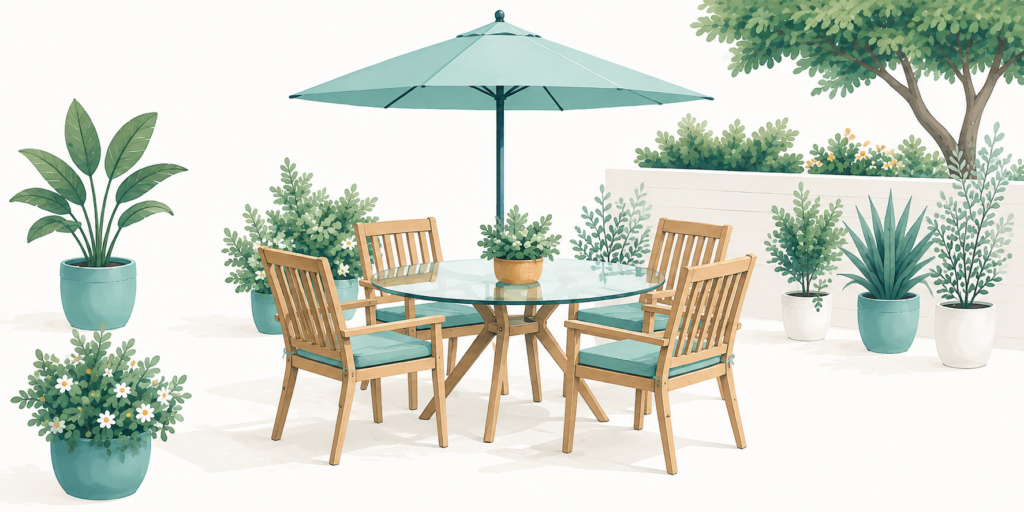
How to Clean Teak Outdoor Furniture
Teak is a dense hardwood with a high natural oil content. This oil is what makes it resistant to rot, insects, and moisture without any added treatment, explaining why it’s a longtime favorite for outdoor furniture.
Not all teak is cut the same: Grade A comes from the oil-rich heartwood, Grade B from wood closer to the outer trunk, and Grade C from the outermost sapwood, with durability dropping at each step down. Left outside, any grade gradually turns a soft, silvery gray in the sun, which is normal weathering rather than damage, so cleaning teak means lifting surface grime, not fighting that color change.
- Sweep off dust and loose debris with a dry cloth.
- Mix a teak-specific cleaner, or 1 cup oxygen bleach per gallon of warm water, following the product’s directions.
- Scrub with the grain using a soft-bristle or teak brush.
- Rinse thoroughly until no cleaner residue is left.
- Give it a full day to dry before applying teak sealer or oil.
Two or three cleanings a year is enough, since teak’s own oils are doing most of the protective work. If you’d rather keep the wood’s original honey-gold color instead of letting it weather to gray, applying teak oil every few months will slow that process down.
It can be tempting to reach for a wire brush or a stronger household bleach on stubborn spots, but both strip away the same oils that make teak durable in the first place, so a soft brush and a teak-specific cleaner are worth sticking to. The same logic applies to covering the wood while it’s still damp: it feels like the protective move, but trapped moisture invites the mildew you’re trying to prevent.
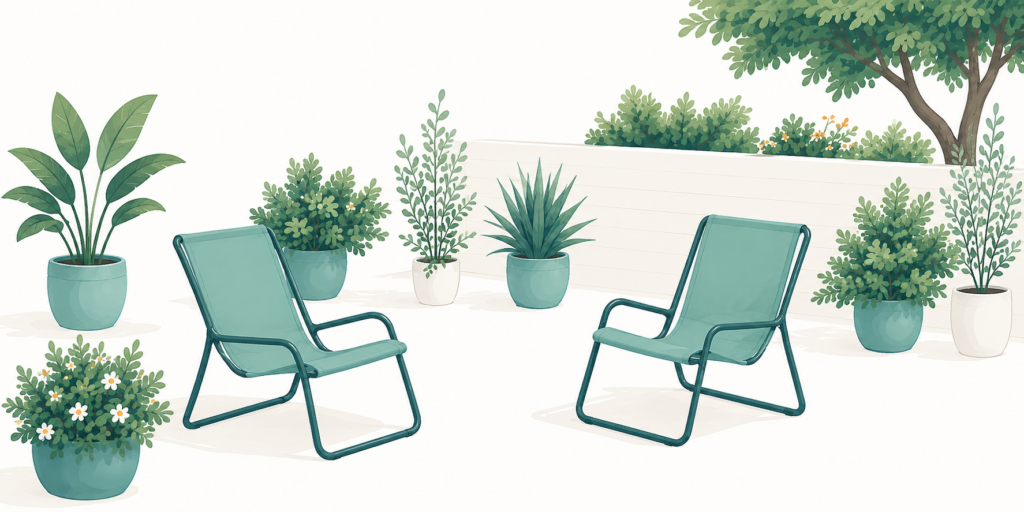
How to Clean Aluminum Patio Furniture
Aluminum patio furniture is either cast, poured into a mold for heavier scrollwork and detailing, or extruded into the lighter, straight-lined tubular frames common on stackable and folding pieces. Because the metal resists rust, it’s a popular outdoor choice. Often powder-coated for added resilience and color, cleaning aluminum is mostly about protecting that finish rather than directly fighting corrosion.
- Rinse the frame with a hose to knock off loose dirt.
- Wash with mild soap, warm water, and a soft cloth or sponge.
- Rinse until no soap film remains.
- Dry with a towel so water doesn’t spot the finish.
- A couple of times a year, buff on a carnauba-based automotive wax to protect the coating.
A wipe every couple of weeks and a full wash once a month is enough, since aluminum resists corrosion well on its own and doesn’t need daily attention. Avoid using steel wool or abrasive pads on stubborn spots. While it seems like the fastest way to get a frame fully clean, both will scratch through the powder coat and expose the bare metal underneath, undoing the exact protection you’re trying to keep intact.
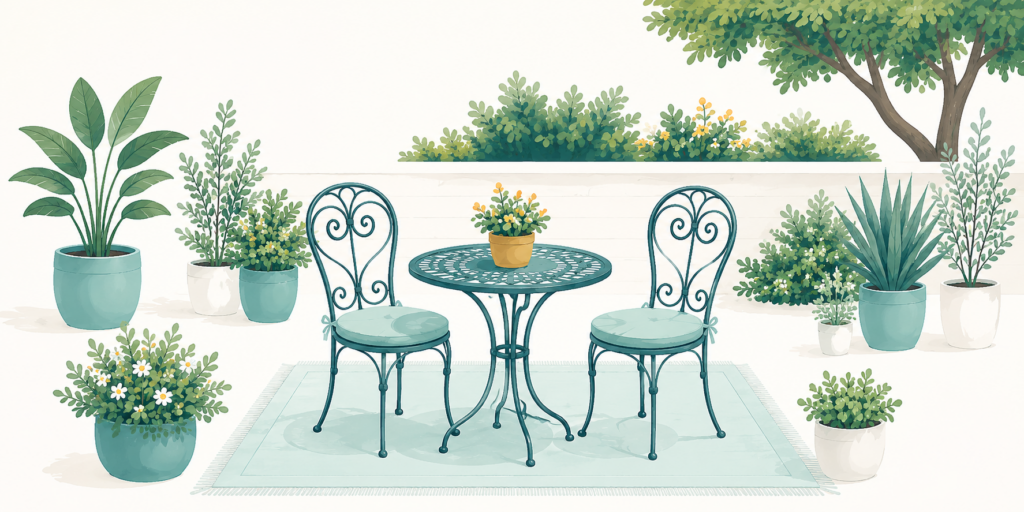
How to Clean Wrought Iron & Steel Outdoor Furniture
True wrought iron is hand-forged from nearly pure iron, though most furniture sold under that name today is actually steel, cast into the same scrollwork patterns and finished with a black powder coat to match the traditional look. Both have stayed popular outdoors for their weight, stability, and classic appearance. The metal underneath either one is only as protected as the finish covering it, so cleaning iron and steel means protecting that finish as much as removing dirt.
- Dust with a dry brush or cloth.
- Wash with mild soap and water using a soft sponge.
- Rinse and dry completely, checking joints and crevices where water likes to pool.
- Look over the piece for rust spots, and sand any you find down to bare metal with 220-grit sandpaper.
- Seal bare or sanded spots with a rust-inhibiting primer and matching touch-up paint.
A wipe-down every couple of weeks and a seasonal check for rust spots is enough to stay ahead of most problems. Two habits matter more than the rest: drying the piece completely after every wash, since standing water is usually where corrosion starts, and repainting any chip as soon as it appears. It’s easy to let a small bare spot go for a while, but rust spreads underneath the surrounding finish quickly once it gets a foothold, turning a five-minute touch-up into a much bigger repair.

How to Clean Outdoor Cushions & Fabric
Outdoor cushions rely on performance fabric, most often solution-dyed acrylic like Sunbrella, along with polyester and olefin blends, built with a water-repellent finish and a quick-dry foam core. This combination is what allows outdoor cushions to live outside without mildewing or fading. Importantly, mildew doesn’t grow on the fabric itself; it grows on the dirt and pollen sitting on top of it. Therefore, cleaning outdoor fabrics means clearing away what’s collected on the surface while protecting its exterior finish.
- Remove the cushion covers if they come off, and brush away loose dirt and debris.
- Mix ¼ cup mild soap into a gallon of lukewarm water.
- Work the solution into the fabric with a soft-bristle brush, covering the whole surface instead of scrubbing one spot.
- Rinse until all the soap is gone.
- Prop the cushions on end so they can air-dry completely, usually 4 to 6 hours in direct sun.
For mildew stains, Sunbrella’s own cleaning instructions recommend 1 cup bleach and ¼ cup mild soap per gallon of water, soaked into the stain for 15 minutes before rinsing clean.
Hosing cushions down once a month handles everyday dust and pollen, with a more thorough cleaning two or three times a year to keep the fabric looking new. If you prefer to store your outdoor cushions during winter months, ensure they are thoroughly dry. Packing away slightly damp cushions and pillows will seal moisture into the fibers and foam padding, inviting mildew to bloom. Also, avoid washing outdoor fabrics with fabric softeners, as the same ingredients that make interior fabrics soft and fragrant actually break down the water-repellent finish performance fabrics depend on.
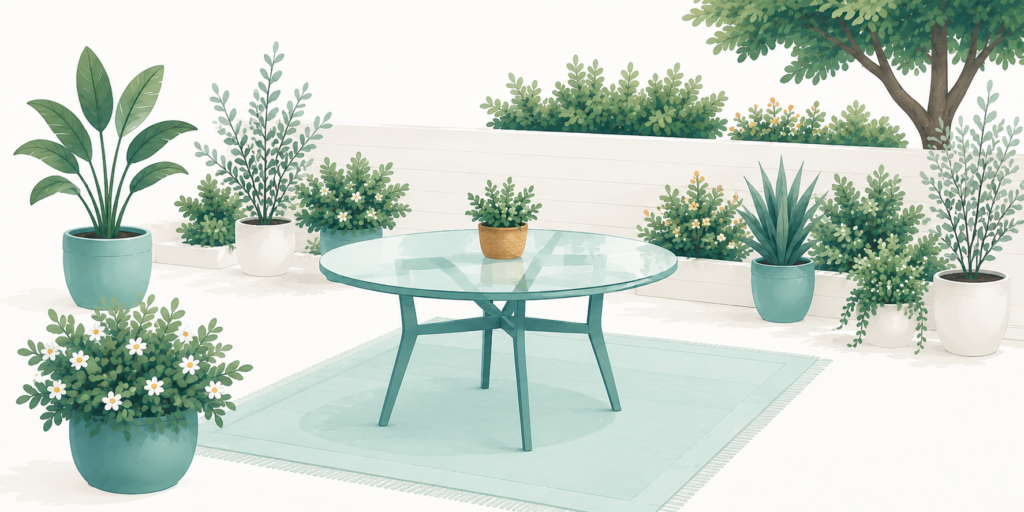
How to Clean Glass Patio Tabletops
All modern outdoor tabletops use tempered glass rather than standard glass, since tempering makes glass stronger and safer. Glass holds up well outside because it doesn’t fade, rot, or corrode the way other materials do. However, it shows every trace of pollen and water spotting. That visibility makes it more high-maintenance than other materials, but luckily it’s one of teh easiest things to consistently clean.
- Clear off leaves and debris.
- Spray on glass cleaner, or a mix of equal parts water and white vinegar.
- Wipe with a microfiber cloth in straight lines rather than circles to avoid streaks.
- Dry the edges and the seam where the glass meets the frame so water doesn’t sit and mark it.
A weekly wipe during heavy pollen season and every couple of weeks otherwise is enough to keep the glass looking clear. If the table has tinted glass or plastic edging, skip ammonia-based cleaners specifically. It’s a common go-to for glass in general, but ammonia can cloud the tint or damage the trim over time, so using a vinegar solution is the safer default.
How Often Should You Clean Outdoor Furniture
The chart below lays out everything above side by side, so you can reference cleaning frequency for all six materials at a glance.
How Often to Clean Each Outdoor Furniture Material
| Material | Light Clean | Deep Clean | Avoid |
|---|---|---|---|
| Wicker & Resin Wicker | Every 2 to 4 weeks | Every 2 to 3 months | Pressure washers on natural rattan |
| Teak | Dust monthly | 2 to 3 times a year | Wire brushes, strong household bleach |
| Aluminum | Rinse every 2 to 4 weeks | Full wash monthly | Steel wool and abrasive pads |
| Wrought Iron & Steel | Wipe every 2 weeks in humid climates | Inspect for rust each season | Leaving furniture wet or chips unpainted |
| Cushions & Fabric | Hose down monthly | 2 to 3 times a year | Storing damp cushions in sealed bins |
| Glass Tabletops | Weekly during pollen season | Every 2 weeks otherwise | Ammonia cleaners on tinted or trimmed glass |
How to Protect Outdoor Furniture Between Cleanings
A good cleaning only lasts as long as the furniture stays protected afterward, and a cover is the simplest way to extend that protection between cleanings. Not all covers do the job equally well: breathable, fitted covers let moisture escape, while tarps trap condensation underneath and grow the same mildew you just spent time removing. To best protect outdoor furniture, follow simple rules:
- Cover cushions and fabric anytime rain is in the forecast, since a few unprotected hours can undo a full cleaning.
- Move teak, wicker, and cushions indoors during long stretches without use. Time out of direct sun slows fading more effectively than any product applied afterward.
- Rinse metal frames more often if you live near salt water. Salt accelerates corrosion considerably faster than plain rain, even through a powder-coated finish.
Severe weather calls for a different kind of protection. Securing or relocating furniture indoors matters more than cleaning it ever will. For more details on how to store, secure, and protect indoor and outdoor furniture from costly storm damage during hurricane season, read our blog How to Prepare Your Furniture for Hurricane Season.

Find Outdoor Furniture That Fits Your Life & Style
The furniture that lasts isn’t necessarily the furniture that costs more. It’s the furniture that gets a few minutes of the right kind of attention each month instead of none at all, which is a small trade for getting years more out of a set you already like.
Take a look at Hudson’s outdoor furniture collection online to compare wicker, teak, and aluminum styles, or visit a Hudson’s Furniture + Mattress showroom, where our design specialists can help match a material and finish to how you actually use your outdoor space.
FAQs
Can I just use dish soap and a hose on all my outdoor furniture?
On sturdy materials such as aluminum and resin wicker, mild dish soap and a hose work well. On teak, dish soap strips the natural oils that protect the wood, and on performance fabric, repeated washing with dish soap can wear down the water-repellent coating. Matching the cleaner to the material protects the finish the same way using the correct product does for furniture indoors.
How often should you clean outdoor furniture?
Most pieces need a light wipe or rinse every couple of weeks and a more thorough cleaning two or three times a year. Cushions and glass require more frequent attention during heavy pollen season, while teak and wicker hold up fine on a quarterly schedule.
What’s the best way to clean wicker outdoor furniture?
Mix ¼ cup mild dish soap into a gallon of warm water and scrub the weave with a soft-bristle brush, following the direction the strands run. Rinse with a light hose stream and let it air dry, and keep a pressure washer away from natural rattan, since forced water can split the fibers.
How do you clean teak furniture without damaging it?
A teak-specific cleaner, or a solution of 1 cup oxygen bleach per gallon of warm water, works well when scrubbed with the grain using a soft-bristle brush. Wire brushes and strong household bleach both strip away teak’s natural oils and are worth avoiding.
Why is my teak furniture turning gray?
That’s teak weathering naturally in the sun, not a sign that anything is wrong. To preserve the original honey-gold color, apply teak oil every few months to slow the graying.
How do you remove mildew from outdoor cushions?
Mix 1 cup bleach and ¼ cup mild soap per gallon of water, apply it to the stain, and let it sit for 15 minutes before rinsing thoroughly. Air-dry the cushion completely afterward, since residual dampness gives mildew a chance to return.
Can you pressure wash patio furniture?
A light setting works fine on aluminum and wrought iron frames, but keep natural rattan and cushion fabric away from a pressure washer entirely. Forced water can split rattan fibers and push moisture deep into cushion foam, where it’s difficult to dry back out.
How do you clean aluminum patio furniture without scratching it?
Use mild soap, warm water, and a soft cloth or sponge, then rinse and dry thoroughly. Steel wool and other abrasive pads will scratch through the powder coating and expose bare metal underneath.
How do you keep wrought iron patio furniture from rusting?
Dry it completely after every wash, since standing water is usually where corrosion starts, and inspect the finish each season for chips. Sand any bare spots with 220-grit sandpaper and seal them with rust-inhibiting primer and matching paint before rust has a chance to spread.
What’s the best cleaner for Sunbrella outdoor fabric?
For everyday dirt, ¼ cup mild soap per gallon of lukewarm water handles most of what accumulates on Sunbrella and similar performance fabrics. For mildew or more stubborn stains, add 1 cup of bleach per gallon and let it soak into the fabric for 15 minutes before rinsing.
How do you clean a glass patio table without streaking?
Spray on glass cleaner or a mix of equal parts water and white vinegar, then wipe with a microfiber cloth in straight lines rather than circles. Dry the seam where the glass meets the frame, since that’s typically where watermarks settle.
Should you cover outdoor furniture when it’s not in use?
Yes, particularly during the off-season or ahead of severe weather. Choose breathable, fitted covers over tarps, since tarps trap condensation underneath and grow the same mildew a good cleaning is meant to eliminate.
What should you do with cushions before a big storm?
Bring cushions and fabric pieces fully indoors rather than relying on a cover, since wind-driven rain tends to find its way past most outdoor covers. Hudson’s storm-prep guide covers what else is worth bringing in and how to anchor whatever remains outside.