by Eric Hod | Design Manager, Hudson’s Furniture
How to Distinguish Between Different Grades of Leather
Two sofas can both be labeled “leather” and yet be made from very different materials. One may develop a rich patina and last for decades, while another may show wear much sooner. That difference can mean hundreds of dollars in price, even when the sofas look nearly identical in a showroom.
The reason is that “leather” is only the beginning of the story. Where the hide comes from, which part of it is used, how it is processed, and what is done to its surface all affect how leather looks, feels, wears, and ultimately what it costs.
Understanding those differences makes it much easier to recognize what you’re actually paying for. Before you choose a leather sofa, learn how to distinguish the major leather types, what makes one more valuable than another, and what to look for when comparing sofas in person.
At a Glance
Top grain leather is the second-highest leather grade, made by sanding the top layer of a hide to remove blemishes and create an even surface. It counts as real, genuine animal hide rather than a synthetic material, sitting one step below full-grain leather in overall quality. Top grain leather costs less than full-grain, resists stains and scuffs better thanks to its protective finish, and works well for busy households. Furniture tagged genuine leather is usually a lower grade than top grain, despite the reassuring name.
Understanding the Different Grades of Leather
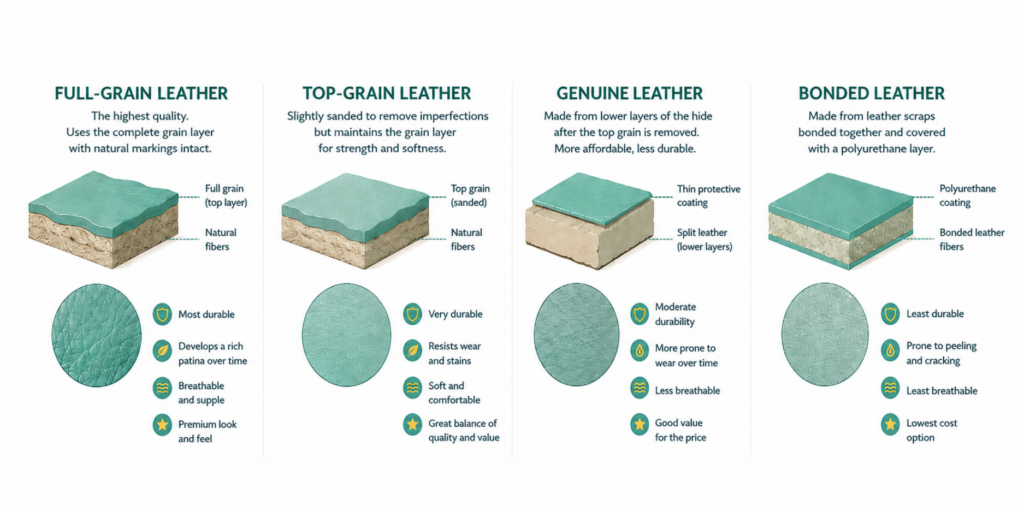
Leather furniture generally falls into four grades, ranked from strongest and most expensive to least durable. Knowing where a hide falls on this scale explains most of the price difference between two sofas looking similar in the showroom.
- Full-Grain Leather: Full-grain leather is the unaltered top layer of the hide, cut directly beneath the hair with nothing sanded or buffed away. It keeps every natural scar, wrinkle, and grain pattern, giving it a rich, varied texture, feeling supple and slightly irregular to the touch. The tightly packed fiber structure makes it the most durable grade available, resisting punctures and tears longer than any other leather. It also carries the highest price, since tanneries can only use hides with minimal natural blemishes.
- Top-Grain Leather: Top-grain leather starts from the same top layer as full-grain, but manufacturers sand or buff away the surface to remove scars and blemishes before applying a protective finish. This leaves a smooth, even surface with a light, springy feel and a more uniform look across a piece of furniture. It holds up well to daily use, resisting stains and scuffs thanks to its finish, though it’s slightly less puncture-resistant than full-grain since some of the fiber structure gets sanded away. Top-grain costs less than full-grain, since tanneries can use hides showing more surface imperfections.
- Genuine Leather: Genuine leather comes from a lower layer of the hide, split away beneath the top grain and heavily treated to look consistent. It has a flatter, more uniform appearance than top-grain, and it often feels thinner and less substantial when pressed. Genuine leather wears out faster than full-grain or top-grain, since the lower hide layer has a looser fiber structure. It costs less than both higher grades, making it a common choice for budget furniture still using a real hide.
- Bonded Leather: Bonded leather isn’t cut from a single hide at all. Manufacturers grind up leftover leather scraps and fibers, then bond them to a fabric backing with polyurethane to create a surface looking like leather. It often feels stiff, plasticky, or cold to the touch compared to genuine hide, and it’s the least durable grade, prone to peeling and cracking within just a few years. Bonded leather is the cheapest option by a wide margin, since it uses scrap material instead of a full hide.
Pros & Cons of Top Grain Leather
Knowing where top grain sits among the four grades explains most of what it costs and how long it lasts, but daily life still comes down to specifics. The breakdown below separates what top grain does well from where it falls short, so you can weigh both before choosing it for your home.
Pros of Top Grain Leather
- Resists stains and spills: The sanded surface and protective finish keep liquids from soaking in, so most spills wipe away with a damp cloth.
- Holds up to daily use: A tight fiber structure and finished surface resist scuffs, scratches, and general wear better than genuine or bonded leather.
- Costs less than full-grain: Manufacturers can use hides with minor blemishes, which lowers material cost without sacrificing much strength.
- Looks consistent across a piece: Sanding evens out color and texture, so cushions, arms, and backrests match more closely than they do on full-grain furniture.
- Works well with busy households: Pet hair, spills, and everyday friction wipe away easily, making top-grain leather a practical choice for families.
Cons of Top Grain Leather
- Loses some natural character: The sanding process removes the grain and light imperfections responsible for full-grain leather’s unique look and rich patina.
- Costs more than genuine or bonded leather: Top grain still commands a higher price than lower grades, even though it costs less than full-grain.
- Finish can wear over time: The protective topcoat can crack or peel after many years of heavy use, especially without regular conditioning.
- Feels slightly less supple: The sanding and finishing process makes top grain leather a bit firmer to the touch than an unfinished full-grain hide.
How To Identify Top Grain Leather in a Showroom
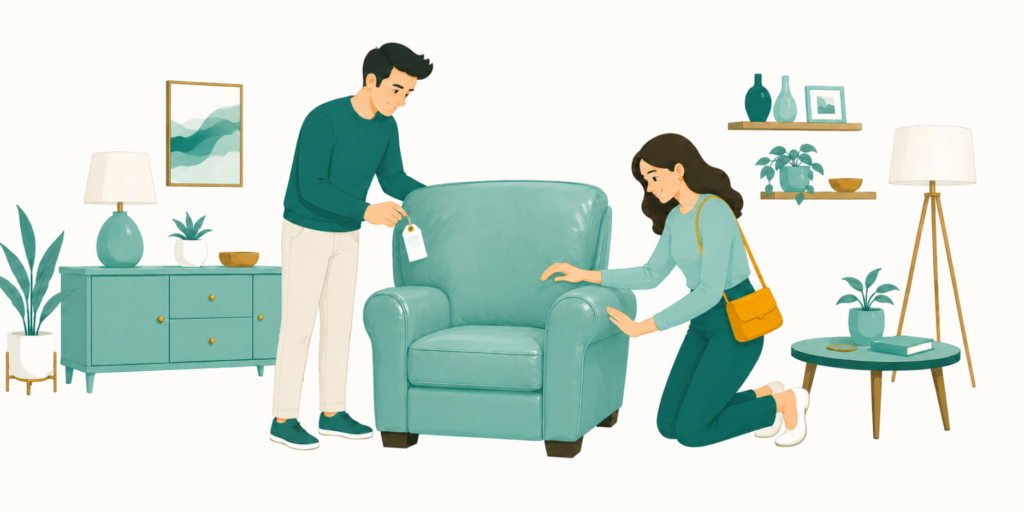
When you’re trying to determine what type of leather a piece of furniture uses, the furniture tag is the best place to start. Manufacturers typically disclose the materials used on a hang tag, cushion label, or frame sticker. Look for the specific leather grade, such as top grain, full grain, genuine, or bonded leather, rather than simply looking for the word “leather.” It’s also important to watch for terms like “leather match” or “leather blend,” which generally mean that genuine leather is used only on the seating surfaces while the arms, back, and sides are covered in a matching vinyl or other synthetic material.
Tags aren’t always reliable, particularly when you’re looking at a floor sample, discontinued piece, or older furniture. They may be faded, missing, or too generic to tell you much about the material. In those cases, knowing how to evaluate the leather itself can give you a better sense of its quality.
Start by looking closely at the surface. Top grain leather tends to have a smooth, consistent appearance with relatively little variation from one section to another, while full grain leather may show more natural characteristics, including subtle color variations, scars, and wrinkles. You can also get a sense of the material by pressing your finger into the surface. Top grain leather should give slightly under pressure and spring back with light, even resistance. Bonded leather, by comparison, often feels stiffer, more plasticky, or noticeably colder to the touch.
If possible, take a look at an area where the material is folded or cut, and the unfinished underside is exposed. Beneath a cushion, along the underside of an armrest, or around the base of the frame can sometimes reveal what the material is made of. Genuine top grain leather has a fibrous, suede-like texture on its unfinished side, while bonded leather typically has a fabric backing beneath its thin surface layer.
Even the smell can provide a clue. Genuine leather has a distinct, warm, earthy scent created during the tanning process, while synthetic and bonded materials can’t completely replicate it.
None of these tests should replace the furniture tag or the manufacturer’s specifications, but they can help you spot inconsistencies when you’re shopping. And if you’re still unsure, ask a sales associate to confirm the leather grade. A reputable retailer should be able to tell you exactly what material is used, even when the original tag is missing.
How to Take Care of Top Grain Leather Furniture
One of the advantages of top-grain leather is that it doesn’t require much maintenance to stay looking beautiful. A few simple habits, however, can make a noticeable difference in how the leather looks and feels over the years.
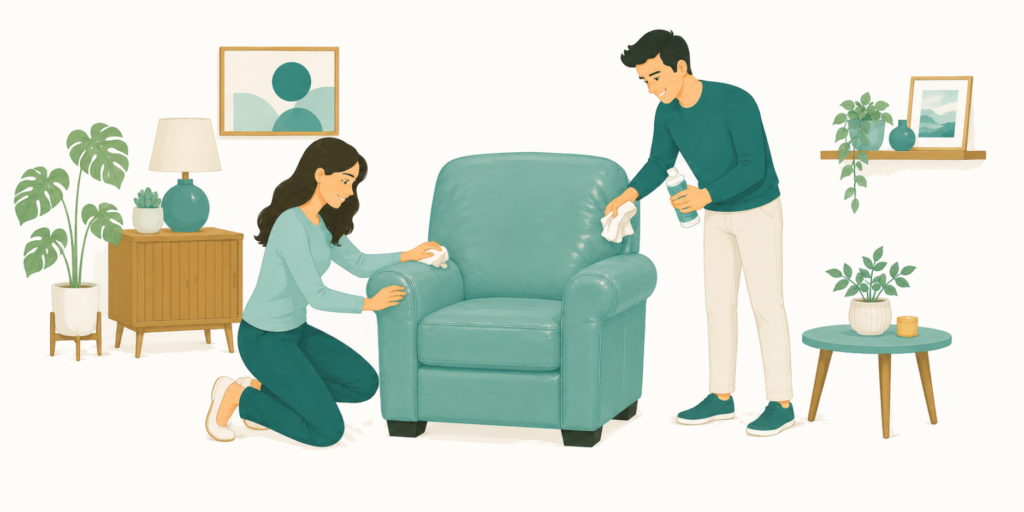
Regularly wiping the surface with a dry or slightly damp microfiber cloth helps remove dust and body oils before they have a chance to build up. If something spills, clean it promptly with a soft cloth, working from the outside of the spill toward the center to prevent it from spreading. Every six to twelve months, applying a leather-specific conditioner can help maintain the leather’s flexibility and reduce the risk of drying or cracking.
It’s also worth paying attention to where you place your furniture. Whenever possible, keep top-grain leather away from direct sunlight, which can gradually fade the color and dry out the protective finish. Together, these simple steps can help preserve the leather without requiring a complicated maintenance routine.
With consistent care, top-grain leather furniture typically lasts 10 to 15 years, and potentially much longer in rooms that see less daily use. The goal isn’t to constantly maintain the leather, but to prevent small amounts of everyday wear from becoming bigger problems over time.
Find Your Perfect Leather Sofa or Sectional at Hudson’s Furniture + Mattress
The right leather grade comes down to how you weigh price, upkeep, and natural character against a smooth, consistent surface. Top-grain leather offers a balance of genuine hide, durability, and value that makes it a popular choice for everyday furniture. And while understanding leather grades makes shopping easier, nothing replaces sitting on a piece and experiencing the material for yourself.
Hudson’s Furniture + Mattress offers leather sofas and sectionals in a range of grades, colors, and styles, giving you the opportunity to compare your options side by side. Browse our selection online to explore different looks and materials, or visit a Hudson’s showroom to see and feel the differences in person with help from our design specialists.
FAQs
What are the four grades of leather?
The four main grades, ranked from highest to lowest quality, are full-grain, top-grain, genuine, and bonded leather. Full-grain keeps the entire natural hide, top-grain is sanded smooth, genuine leather comes from a lower hide layer, and bonded leather is made mostly from scrap fibers.
How is top grain leather made?
Tanneries start with a full, unsplit hide and run it through a splitting machine, separating the thick hide into two or more horizontal layers. Manufacturers sand and buff the top layer, apply a finish coat, and often add a light embossed texture to create an even, consistent hide. This process makes top-grain leather easier to grade consistently than full-grain leather, which keeps every natural variation.
How long does top grain leather furniture last?
With regular cleaning and conditioning, top-grain leather furniture typically lasts ten to fifteen years. Pieces in formal living rooms with lighter daily use often last even longer.
Does top grain leather crack or peel?
The protective finish on top-grain leather can crack or peel after many years, especially without regular conditioning or heavy sun exposure. Conditioning the leather every six to twelve months and keeping it out of direct sunlight prevents most premature wear.
Is top grain leather good for pets?
Yes. Top grain leather resists scratches, spills, and pet hair better than fabric or genuine leather, and most messes wipe away with a damp cloth. Regular claw contact can still scuff the surface over time, so trimming pet nails helps preserve the finish.
How can you tell if leather is top grain?
Top grain leather has a smooth, even surface with little natural variation and a light, springy feel when pressed. The underside typically shows a fibrous, suede-like texture, unlike bonded leather, revealing a fabric backing beneath a thin surface layer.
Can top grain leather be repaired if it tears?
Minor scuffs and small scratches on top grain leather often buff out with a leather conditioner or repair kit made for finished leather. Larger tears usually need a professional leather repair technician, especially on furniture with significant everyday use.
Which furniture pieces work best in top grain leather?
Top grain leather works well for sofas, sectionals, recliners, and chairs in living rooms, family rooms, and home offices seeing regular daily use. Its stain resistance and consistent look make it a practical choice for busy households with kids or pets.