
by Eric Hod | Design Manager, Hudson’s Furniture
A Clear Guide to Mattress Lifespan & Better Sleep
If you’re waking up tired, sore, or restless, your mattress might be part of the problem. Most people don’t replace their mattress until sleep becomes frustrating enough that they can’t ignore it anymore. The tricky part is knowing whether your mattress is truly worn out or if a small change could make it feel better again.
A mattress doesn’t fail all at once. Support slowly breaks down, pressure points start to show up, and sleep quality changes little by little. You may even sleep better in a hotel or guest room and wonder why your bed feels so different at home. That’s often the first sign something has changed.
This guide walks you through how long mattresses typically last, the clearest signs it’s time to replace yours, how an old mattress affects your sleep and health, and whether a topper can help or if a new mattress is the smarter move. By the end, you’ll have a clear answer and confidence in what to do next.
Jump to what you want to know:
- How long should a traditional innerspring mattress last?
- How long should a memory foam mattress last?
- How long should a hybrid mattress last?
- How long should a latex mattress last?
- Top 8 signs it’s time to replace your mattress
- Mattress replacement quiz
- How a worn-out mattress can affect your sleep & health
- How to choose the right type of mattress
- 7 tips to help your mattress last longer
- Frequently asked questions
How Long Should a Mattress Last Based on Its Type?
Most mattresses last somewhere between 7 and 10 years, but that number can vary quite a bit depending on what the mattress is made of. Different materials wear down in different ways, which helps explain why two mattresses of the same age can feel completely different. One might still feel supportive and comfortable, while the other causes aches, poor sleep, and constant tossing and turning.
All mattresses slowly lose their ability to support your body the way they once did. Foams soften, coils lose tension, and comfort layers compress over time. This usually happens gradually, which is why many people don’t realize their mattress is contributing to sleep problems until the issues become hard to ignore. Knowing the typical lifespan of your mattress type gives you a useful reference point, but how your mattress feels night after night matters just as much as how long you’ve owned it.
Here’s what you can expect from the most common mattress types and the clearest signs that each one may be reaching the end of its useful life.
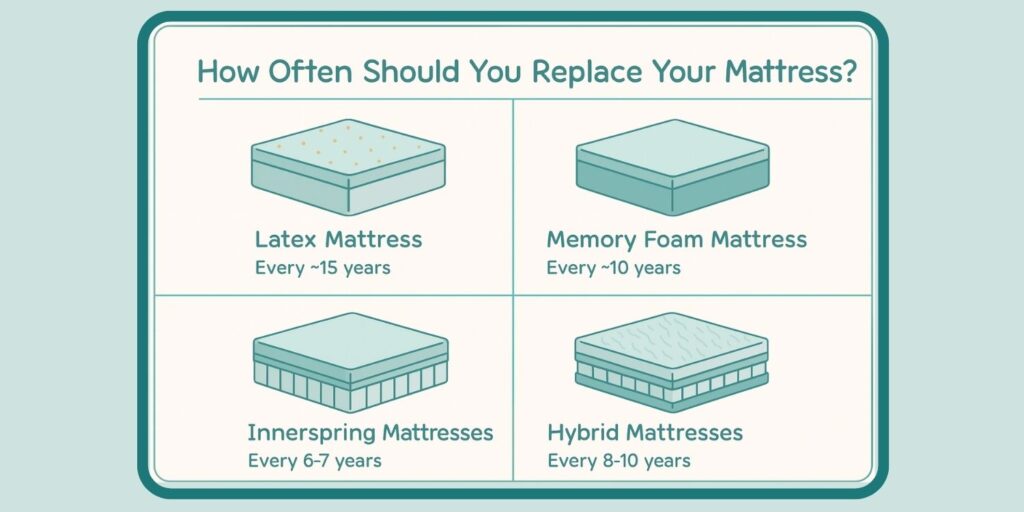
Traditional Innerspring Mattresses (6–8 years)
Traditional innerspring mattresses rely on steel coils for support, with thinner layers of padding on top. Over time, those coils lose their ability to respond evenly to weight, and the comfort layers above them begin to compress. As this happens, the mattress can start to feel uneven or unstable, especially in the areas where you sleep most often.
Because the support system is mechanical, innerspring mattresses often show wear more obviously than other types. Noises, sagging, and a general lack of structure tend to appear once the internal components begin to break down. When that support is gone, comfort fixes rarely last very long.
Signs Your Innerspring Mattress Needs Replacing
- The mattress sags in the middle or where you sleep most often
- You hear creaking or squeaking when you move
- The surface feels uneven or lumpy
- You wake up sore or stiff despite getting enough sleep
Memory Foam Mattresses (8–10 years)
Memory foam mattresses typically last longer than traditional innersprings because they don’t rely on metal coils. Instead, they use layers of foam that contour to your body to relieve pressure. Over time, those foams can soften too much, which affects how well the mattress supports your spine during sleep.
One of the tricky things about memory foam is that it can still feel comfortable at first, even when the underlying support has declined. The mattress may look fine on the surface, but deeper layers no longer hold your body in proper alignment. This can quietly lead to discomfort that builds over time.
Signs Your Memory Foam Mattress Needs Replacing
- Deep body impressions that don’t spring back
- A feeling of being stuck or trapped when you change positions
- More heat buildup than you remember when it was new
- Ongoing lower back or hip discomfort in the morning
Hybrid Mattresses (8–10 years)
Hybrid mattresses combine a coil support system with thicker foam or latex comfort layers. This design often provides a balanced feel, offering both responsiveness and cushioning. Because hybrids have multiple components, wear doesn’t always show up all at once.
As a hybrid mattress ages, support may weaken in certain areas before others. You might notice sagging under the hips or reduced support along the edges, even if the rest of the mattress still feels comfortable. These changes can be subtle at first but tend to become more noticeable over time.
Signs Your Hybrid Mattress Needs Replacing
- Sagging or softness around heavier parts of your body
- Less support along the edges when sitting or sleeping near them
- Uneven firmness across the surface
- Increased motion transfer compared to earlier years
Latex Mattresses (10–12 years or more)
Latex mattresses are known for their durability and tend to last longer than most other mattress types. Latex naturally resists sagging and holds its shape well, which means these mattresses often maintain support for many years. Because of that, wear tends to show up more gradually.
Instead of obvious dips or breakdown, an aging latex mattress usually changes in more subtle ways. The surface may feel less responsive, or the overall comfort may seem flatter than it once did. Many people don’t recognize these shifts until they compare their mattress to a newer one.
Signs Your Latex Mattress Needs Replacing
- A noticeable loss of bounce or responsiveness
- Comfort feels flatter or less supportive than before
- You wake up feeling less rested despite sleeping through the night
- Pressure relief feels less consistent across the surface
Top 8 Signs It’s Time to Replace Your Mattress
If you know exactly what type of mattress you have and how old it is, lifespan guidelines can be helpful. But many people don’t have that information. Mattresses get moved, replaced piecemeal, or inherited from a previous home, and years can blur together faster than we realize. In those cases, focusing on materials and timelines isn’t always enough to make a clear decision.
That’s where lived experience matters more than specifications. No matter what type of mattress you own, an aging or worn-out mattress tends to create the same kinds of problems over time. If you’re noticing any of the issues below, they’re often byproducts of a mattress that’s no longer supporting your body the way it should, regardless of its construction.
- You wake up stiff, achy, or less rested than you expect
If you’re getting enough hours of sleep but still wake up sore or tired, your mattress may not be providing consistent support anymore. As materials break down, your spine can drift out of alignment overnight, which forces muscles to stay engaged instead of recovering. Over time, this can make mornings feel harder than they should.
- Comfort is harder to find, no matter how you sleep
An older mattress often feels fine in one position but uncomfortable in another. You might spend extra time shifting, adjusting pillows, or trying to settle in. That constant search for comfort is a common sign that the mattress surface is no longer responding evenly to your body.
- You toss & turn throughout the night
Frequent movement is your body’s way of coping with pressure points or poor support. Even if you don’t fully wake up, these micro-adjustments interrupt deeper stages of sleep. When this becomes a pattern, it’s often tied to a mattress that can’t maintain comfort for long stretches.
- You sleep better anywhere else
If you consistently sleep better in hotels, guest rooms, or even on a different mattress at home, that comparison is worth paying attention to. Familiarity shouldn’t make your own bed feel worse. When temporary beds feel more restful, it often means your mattress has changed more than you realize.
- Your mattress feels uneven, soft in spots, or unstable
You don’t need obvious sagging to have a problem. Subtle soft spots, uneven firmness, or a general lack of stability can all signal internal wear. These changes tend to happen gradually, which makes them easy to overlook until discomfort becomes routine.
- You wake up hot or overheat more easily
As mattresses age, airflow often decreases, and materials trap more heat. If temperature issues are new or worsening, it may be related to a breakdown in the comfort layers. Poor temperature regulation makes it harder to stay asleep and can compound other comfort issues.
- Nighttime allergy or congestion symptoms have increased
Older mattresses naturally accumulate dust mites, allergens, and moisture over time. Even with cleaning, these buildup issues can contribute to nighttime congestion, sneezing, or itchy eyes. According to Allergic Living, indoor allergens can affect sleep quality and overall comfort, especially while you’re resting for hours in one place.
- Your sleep has gradually declined without a clear reason
Sometimes the biggest sign is the hardest to pinpoint. If sleep just doesn’t feel as restorative as it once did and no other changes explain it, your mattress may be the missing piece. Gradual decline is often how mattress-related sleep issues show up.
Take Our Mattress Replacement Quiz
You don’t need to experience every one of the above issues for your mattress to be the problem. If several of them feel familiar, especially if they’ve become part of your normal routine, it’s a strong signal that your mattress may no longer be supporting you the way it should.
If you’re still unsure where you land, take our quick self-test below to help you connect the dots between what you’re feeling, how your mattress is behaving, and what makes the most sense moving forward.
How a Worn-Out Mattress Can Affect Your Sleep & Health
If you’ve determined that your mattress likely needs replacing, it’s fair to wonder whether it’s truly that big of a deal. After all, discomfort can feel manageable, and poor sleep often creeps in slowly enough that it becomes familiar. When life is busy, it’s easy to push the decision down the list and tell yourself you’ll deal with it later.
The problem is that sleep isn’t something your body can “make up” for indefinitely. When a mattress no longer supports proper alignment or pressure relief, your body works harder overnight instead of recovering. Muscles stay partially engaged, joints don’t fully relax, and your nervous system never quite settles into the deeper stages of rest that restore energy and resilience.
In the short term, this often shows up as stiffness, fatigue, and trouble focusing during the day. You may feel slower in the morning, rely more on caffeine, or notice that small aches linger longer than they used to. These symptoms can feel minor on their own, but over time, they tend to stack on top of one another.
Longer term, chronic poor sleep can have a much broader impact. Research shows that ongoing sleep disruption is linked to increased stress, reduced immune function, mood changes, and difficulty with memory and concentration. A mattress that quietly undermines sleep quality night after night can contribute to these issues without ever feeling like the obvious cause.
There’s also the cumulative effect on pain. When your body doesn’t get consistent, restorative rest, it becomes less efficient at healing and regulating inflammation. What starts as occasional soreness can turn into persistent discomfort simply because your body never gets the downtime it needs to reset.
Perhaps the most important thing to understand is that better sleep often leads to noticeable improvement faster than people expect. Many customers are surprised by how quickly mornings feel easier, and energy levels stabilize once their mattress properly supports them again. It’s not about chasing perfect sleep. It’s about removing a barrier that’s been quietly working against you.
If replacing your mattress feels like a big decision, that’s because it is. But it’s also one of the few changes that directly affects how you feel every single day. When sleep improves, everything built on top of it tends to improve as well.
How to Choose the Right Type of Mattress
At this point, you’ve likely narrowed down whether replacement makes sense. The next question is simpler, but it can feel just as personal. Which type of mattress will actually support your sleep, night after night, without creating new problems down the road?
Rather than focusing on materials or construction details, it helps to start with how your body behaves during sleep. Think about where you feel discomfort, how often you move, whether you sleep alone or with a partner, and what helps you feel settled versus restless. Those patterns usually point toward the right mattress type more clearly than specs ever could.
Traditional Innerspring Mattresses
An innerspring mattress can be a good fit if you like a bed that feels stable and predictable the moment you lie down. These mattresses don’t contour deeply, which some people find reassuring, especially if they prefer to feel supported on top of the mattress rather than nestled into it.
They often appeal to sleepers who value ease of movement and a firmer overall feel. If you tend to reposition often or don’t enjoy the sensation of foam shaping closely to your body, this style can feel refreshingly straightforward.
Consider buying a traditional innerspring mattress if you:
- Prefer a firmer, more traditional sleep surface
- Like to move freely without resistance
- Don’t enjoy deep contouring or sinking sensations
- Want a simple, no-frills feel
- Are shopping for a guest room or occasional use
Shop all traditional innerspring mattresses >>
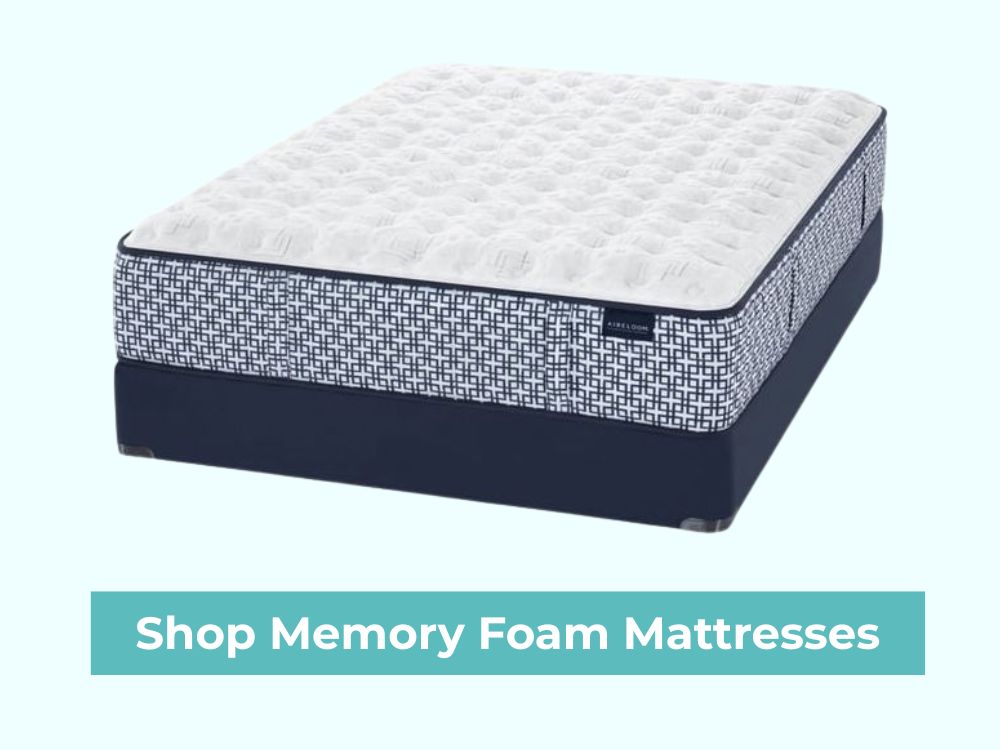
Memory Foam Mattresses
Memory foam tends to work well for people who are very aware of pressure points. If discomfort in your shoulders, hips, or lower back tends to wake you up or make it hard to settle in, this type of mattress often feels noticeably more forgiving.
The close contouring can also make a big difference if you share a bed. Movement is absorbed rather than transferred, which helps reduce sleep disruptions. The feel is more enveloping, which some people love, and others need time to adjust to.
Consider buying a memory foam mattress if you:
- Feel pressure buildup during the night
- Sleep primarily on your side
- Share a bed and wake easily from movement
- Prefer a softer, more cradled feel
- Like a mattress that adapts closely to your body
Shop all memory foam mattresses >>
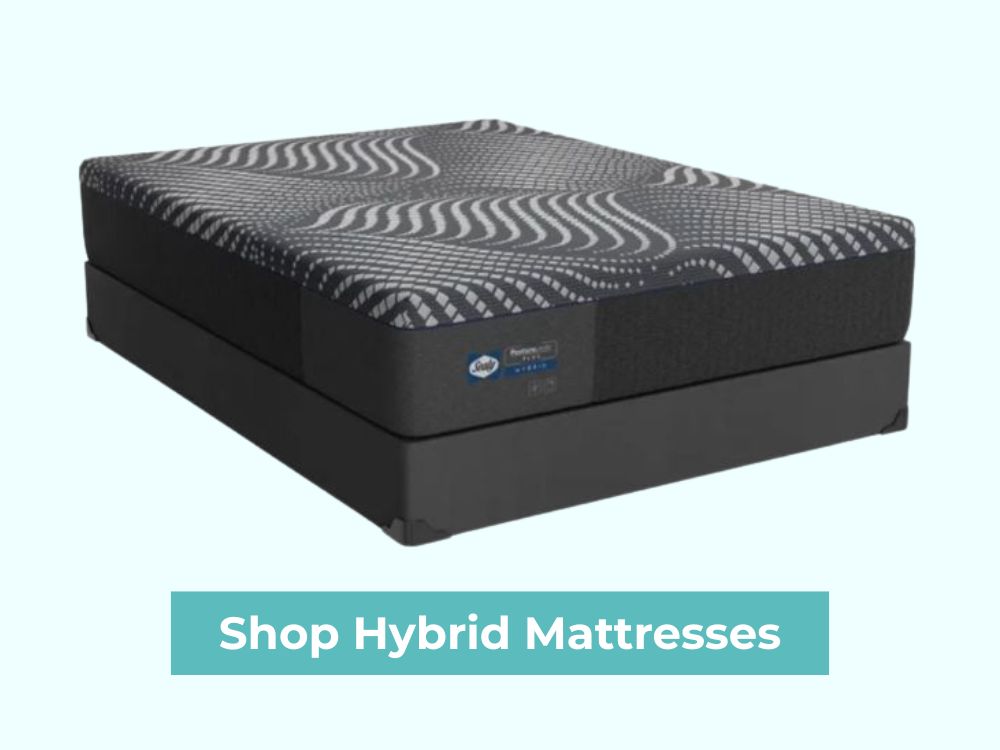
Hybrid Mattresses
Hybrid mattresses tend to suit people who feel stuck between categories. If you want cushioning but still need a sense of structure underneath, hybrids often strike that balance more naturally than other types.
They’re especially helpful for couples with different preferences, since the mix of support and comfort tends to work for a wider range of sleepers. If you’ve tried firm beds that felt too rigid or plush beds that felt too soft, a hybrid can feel like a welcome middle ground.
Consider buying a hybrid mattress if you:
- Want both pressure relief and support
- Sleep in more than one position
- Share a bed with someone who has different preferences
- Like some contouring without feeling stuck
- Want a versatile, adaptable option
Shop all hybrid mattresses >>
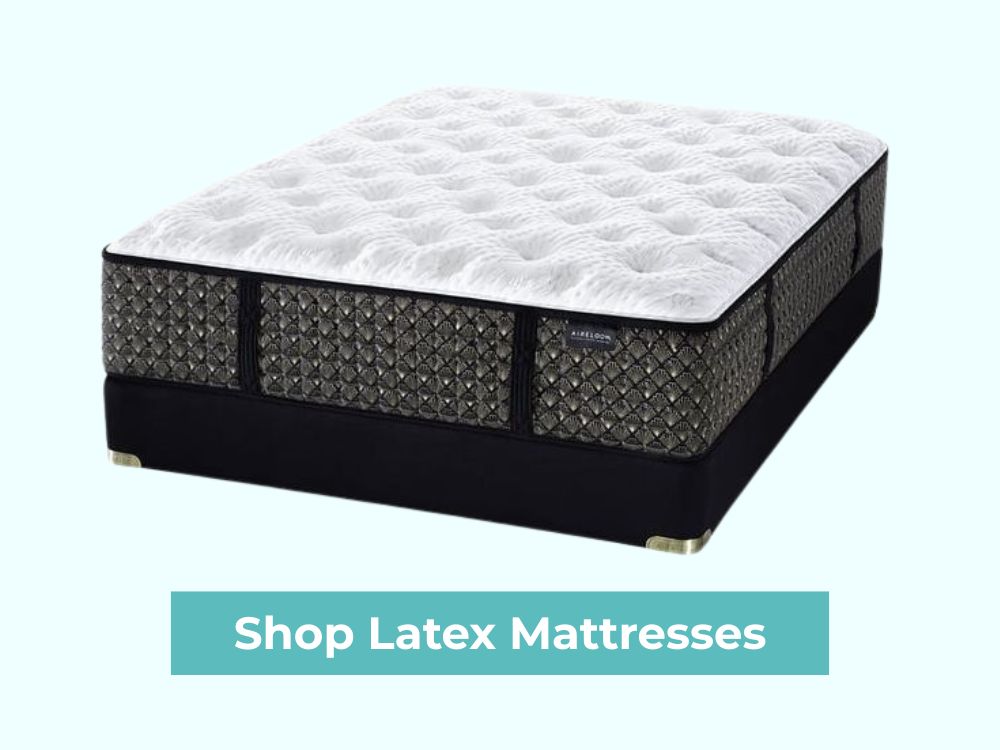
Latex Mattresses
Latex mattresses often appeal to people who want support without feeling confined. The surface responds quickly to movement, which makes it easier to change positions and maintain a consistent feel across the mattress.
If you like a bed that feels resilient and supportive rather than plush or pillowy, latex may feel especially comfortable. Many people describe it as supportive without being rigid, offering structure while still feeling inviting.
Consider buying a latex mattress if you:
- Prefer a responsive, buoyant sleep surface
- Change positions frequently during the night
- Want consistent support across the mattress
- Don’t enjoy deep sinking or slow response
- Value a mattress that feels stable and supportive
Shop all latex mattresses >>
Explore Mattress Types at Hudson’s Furniture + Mattress
If you’re still not quite sure what feels right, browsing mattress types online can help you compare options at your own pace. Our website lets you explore each category side by side so you can get a clearer sense of what fits your comfort preferences before making any decisions.
7 Tips to Help Your Mattress Last Longer
After reading this article, you may discover you don’t need a new mattress right away. Your mattress may still be doing its job, even if it’s starting to show early signs of age. Or, you may simply not be in a position to replace a mattress at the moment, and that’s okay. If your mattress is still generally comfortable and supportive, a few thoughtful habits can help you get more out of it while you plan your next step.
These tips won’t reverse structural wear or fix a mattress that’s already failing, but they can slow uneven breakdown and help preserve comfort over time. Think of them as ways to support the mattress you already have, much like regular maintenance keeps a car running better for longer.
- Rotate your mattress on a regular schedule
Most people sleep in the same spot every night, which causes materials to compress unevenly. Rotating your mattress every three to six months helps distribute weight more evenly across the surface. Over time, this can reduce deep impressions and help the mattress maintain a more consistent feel.
- Use a quality mattress protector
A mattress protector does more than guard against spills. It also helps block moisture, dust mites, and everyday wear that slowly breaks down comfort layers. Even breathable protectors can make a noticeable difference in how long a mattress stays fresh and supportive.
Shop quality mattress protectors >>
- Make sure your mattress has proper support
What’s underneath your mattress matters more than many people realize. A worn box spring, slatted base with wide gaps, or an unsupported frame can cause premature sagging. Using the right foundation helps the mattress wear the way it was designed to and preserves its internal structure.
Shop all mattress foundations >>
- Keep your sleep environment well ventilated
Heat and moisture accelerate material breakdown. Keeping your bedroom well ventilated and maintaining a comfortable room temperature helps reduce moisture buildup inside the mattress. This can improve both comfort and durability over time.
- Avoid sitting in the same spot every day
Beds often double as places to read, watch TV, or work on a laptop. Sitting in the same spot repeatedly puts concentrated pressure on one area of the mattress. Changing where you sit or spreading that use across the surface can help prevent early wear.
- Clean & care for your mattress periodically
Vacuuming the mattress surface occasionally and addressing spills promptly helps keep materials in better condition. While cleaning won’t restore support, it does reduce allergen buildup and contribute to a healthier sleep environment.
- Pay attention to changes in comfort
Perhaps the most important tip is awareness. Check in with how your mattress feels every few months. If comfort or support is changing despite good care, that information helps you plan ahead instead of being caught off guard when sleep quality drops.

A mattress should help you wake up rested, not sore or exhausted. If your bed shows clear signs of wear or your sleep quality has declined, replacing it can make a bigger difference than you expect. Use the signs, quiz, and guidelines above to decide what’s right for you.
When you’re ready, explore our selection of <a href="/mattresses">mattresses</a> or visit a Hudson’s Furniture + Mattress showroom to find the comfort and support your sleep deserves. You’ve got the knowledge now to make a confident choice.
FAQs
How do I know if my mattress needs to be replaced?
If you wake up sore, sleep restlessly, or notice declining comfort without another clear cause, your mattress may no longer be supporting you properly. Consistent sleep issues are often a stronger signal than age alone.
How long should a mattress last?
Most mattresses last about 7 to 10 years, though this varies by mattress type and daily use. Changes in comfort, support, or sleep quality usually matter more than the exact number of years.
Can a bad mattress really affect my health?
Yes. Poor mattress support can disrupt sleep, strain muscles and joints, and reduce the quality of rest your body needs to recover. Over time, chronic poor sleep can affect energy levels, mood, and overall well-being.
Is a mattress topper enough, or do I need a new mattress?
A topper can help if your mattress is still supportive but slightly uncomfortable. If the mattress sags, feels uneven, or causes ongoing pain, replacement is usually the better long-term solution.
What type of mattress is best for back pain?
There isn’t one best mattress for everyone, but proper support and pressure relief are key. Many people with back pain do well with memory foam or hybrid mattresses that balance cushioning with alignment.
Does mattress type matter if I move a lot while sleeping?
Yes. If you change positions often, responsive mattress types like hybrid or latex can make movement easier and help maintain consistent support throughout the night.
How can I make my mattress last longer?
Rotating your mattress regularly, using a mattress protector, and making sure it’s properly supported can help extend its lifespan. Paying attention to changes in comfort also helps you plan ahead.
Why do I sleep better in hotels than at home?
Hotel mattresses are often newer and provide more consistent support than older home mattresses. If this happens regularly, it may be a sign your mattress has worn out.
What should I focus on when shopping for a new mattress?
Start with how you sleep, where you feel discomfort, and what helps you feel rested. Comfort preferences matter, but long-term support is what protects your sleep over time.