
by Eric Hod | Design Manager, Hudson’s Furniture
Why the Same Recliner Doesn’t Work for Everyone
The best recliner for back pain is not the one with the deepest recline or the plushest cushion. It’s the one built around firm lumbar support, the right seat depth, and a recline angle which keeps your spine in a neutral position instead of letting your lower back collapse into a slump. A chair marketed for back pain doesn’t automatically resolve it, because relief depends on more than the label. The type of back pain you’re experiencing, your own body dimensions, and how well those measurements match a specific chair’s seat depth, recline angle, and lumbar shape determine whether the marketing claim holds up for you.
The sections below cover whether recliners genuinely help lower back pain and sciatica, which recliner types work best for each condition, and the specific features separating each type of reclining chair.
At a Glance
The best recliner for back pain combines firm lumbar support, a seat depth matching your leg length, and a recline angle between 130° and 170°. Zero gravity and power lift recliners help most with sciatica and lower back pain, since they lift the hips above the knees and take pressure off the spine.
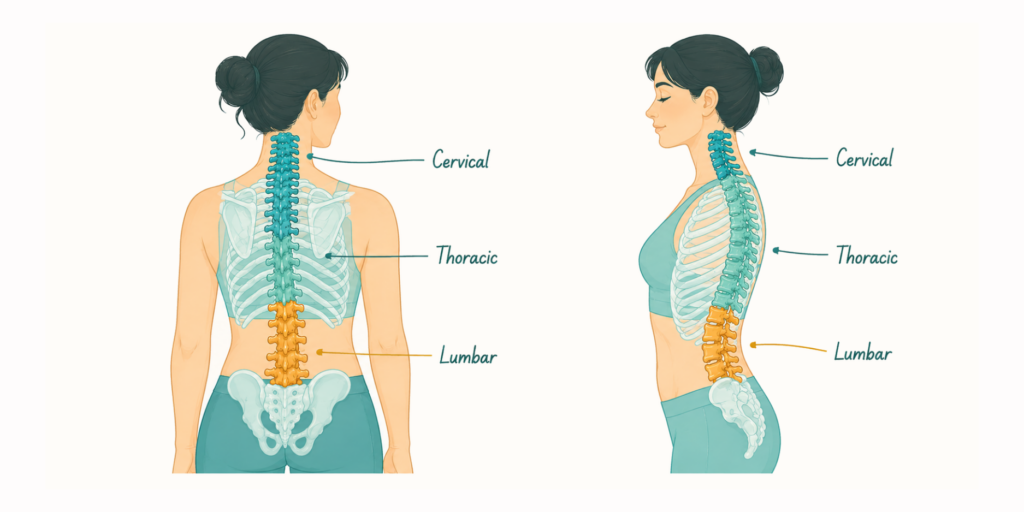
Where the Lumbar Spine Sits Among Your Spine’s Three Regions
Your spine has three main regions. The cervical spine runs through your neck. The thoracic spine spans your upper and mid back, where your ribs attach. The lumbar spine covers your lower back, between your ribs and your pelvis. Lumbar support refers to specifically supporting your spine’s lower region. This portion of your spine is naturally curved towards your belly button, and the best recliners for reducing lower back pain are built to support and maintain its natural inward curve. When people talk about a recliner’s lumbar support, they mean support for this lower back curve, not your neck or your upper back
Why Recliners Are Good for Back Pain
Recliners are excellent for back pain because a proper recline shifts weight off your spine, allowing the back muscles that continuously hold your torso in place to relax. Research on sitting posture backs this up. According to WebMD, one study used MRI scans to compare three positions: slouching forward, sitting straight up at a 90-degree angle, and leaning back to about 135 degrees. Researchers concluded the 135-degree position “put the least stress on the spine” and may reduce the risk of back pain.
Not every recliner delivers this benefit, though. The recline angle only helps if the seat holds your lower lumbar spine in its natural curve. Recliners built for lower back pain include a lumbar contour in the cushion, enabling you to increase or decrease the amount of lumbar support to your specific needs. Seat depth works in tandem with lumbar support. When the two are matched to your body, your knees clear the front edge of the seat while your lower back settles fully against the lumbar curve, without curving or stretching to reach it.
It’s important to keep in mind, not all recliners advertised as being able to relieve back pain are guaranteed to relieve your specific back pain. Similar to finding the right mattress, much of a recliner’s ability to provide relief depends on personal measurements, the specific type of pain you’re dealing with, and personal preference. Having a sense of where to start, based on your type of back pain and what has helped others with this same type of pain, is valuable information to have before you start shopping. Educating yourself before you begin makes shopping far easier.

How Recliners Help Relieve Sciatica
Sciatica is nerve pain which travels from your lower back through your hip and down your leg, caused by compression or irritation of the sciatic nerve where it exits the lower spine. Unlike general lower back pain, which stays centered in the muscles around your spine, sciatica radiates outward and often brings numbness, tingling, or weakness along with the pain itself.
Recliners help relieve sciatica by opening the space between the lumbar vertebrae, easing pressure on the nerve roots which send pain down the hip and leg. A reclined position which raises your legs and opens this vertebral space is why zero gravity and power lift recliners come up so often in sciatica discussions.
Zero gravity positioning reclines the backrest to between 120° and 130° while raising your legs above heart level, distributing your weight evenly across the chair instead of concentrating it on your hips and lower spine. This design borrows from NASA’s research into neutral body posture for astronauts, and the same mechanism which reduces spinal loading in microgravity reduces the compression on lumbar discs on the ground.
Sciatica symptoms vary enough from person to person, and a recliner which helps one person may aggravate another, particularly if numbness or tingling worsens in a fully reclined position. Anyone with sciatica should ease into a new recline angle gradually and return to an upright position if symptoms sharpen rather than ease.

Recliner Features to Prioritize for Relieving Back Pain
A handful of features determine whether a recliner supports your back or works against it. Here’s what actually matters, and what to check before you buy or sit down in a showroom.
Lumbar Support
Look for a fixed lumbar contour built into the frame, or better, an adjustable bolster you can raise, lower, or inflate to match your own curve. A cushion which simply feels soft is not the same as one shaped to hold the small of your back in its natural position. Test this in person by sitting all the way back to see whether your lower spine touches the support immediately, without needing to shift or add a pillow. If it doesn’t, check to see if the recliner has an adjustable lumbar control dial you can fine-tune. If it has neither immediate support or a lumbar adjustment setting, that model’s not right for you.
Recline Angle & Positioning
A recliner’s angle range determines how much pressure comes off your spine. Standard power recliners typically stop between 130° and 150°, enough for most lower back pain relief. Zero gravity models reach 120° to 130° while lifting your legs above your heart, the position most associated with sciatica relief and disc decompression.
Seat Depth & Cushion Firmness
Your knees should clear the front edge of the seat by a couple of finger-widths when your back rests fully against the lumbar support. A seat too deep pushes you forward, off the lumbar cushion, while a seat too shallow leaves your thighs unsupported. Firm cushioning holds its shape under weight, while overly soft foam lets your hips sink below your knees and pulls your spine out of alignment,
Headrest & Neck Support
A headrest which stays fixed while the backrest reclines pushes your chin down and strains your neck exactly when the rest of your spine is finally relaxing. Independently adjustable headrests, common on power and zero gravity recliners, move with your recline angle instead of against it, keeping your neck in line with the rest of your spine.
Footrest & Leg Elevation
An independent footrest lets you raise your legs without forcing your back into a full recline, useful for anyone who wants leg support during the day without lying flat. Look for a footrest which locks at multiple heights rather than one which only extends fully or not at all.
The Best Recliners for Managing Back Pain
Recliner styles differ enough in design, and the right choice depends on your specific back condition, not just your budget or your favorite fabric. The four most common types of recliners include zero gravity recliners, power lift recliners, wall hugger recliners, and rocker recliners.

Zero Gravity Recliners
Zero gravity recliners recline between 120° and 130° and lift your legs to roughly heart level, distributing your weight evenly across the chair frame instead of concentrating it on your hips and lower spine. This position comes closest to true spinal decompression and shows up most often in recommendations for sciatica and chronic lower back pain.
A zero gravity recliner makes sense if you:
- Deal with sciatica or nerve-related back pain
- Want the deepest possible pressure relief for your spine
- Spend long stretches in the chair, not just an hour at a time
- Have circulation concerns which benefit from raised legs
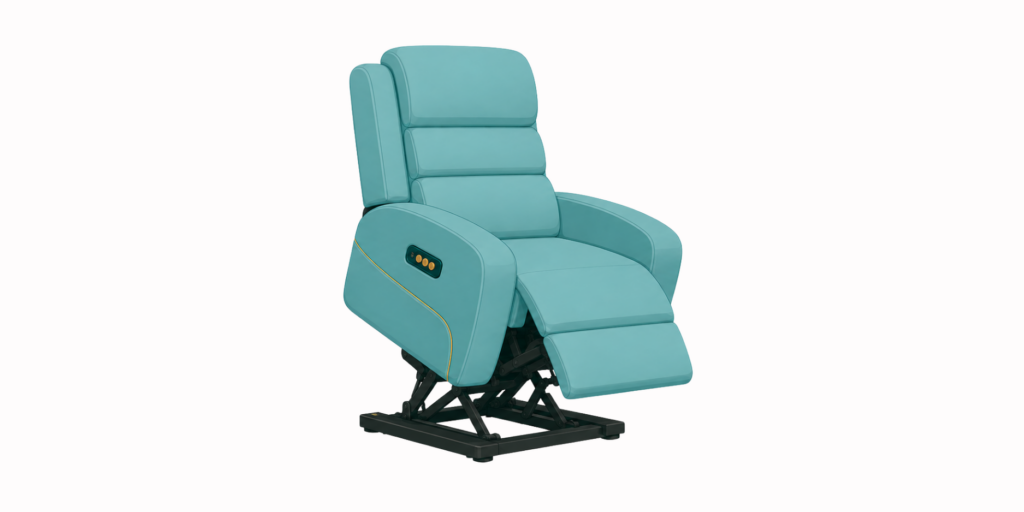
Power Lift Recliners
Power lift recliners tilt the entire chair forward to help you stand, then recline like any other power chair once you’re seated. The lift function matters most for anyone whose back pain makes standing up from a low, soft seat difficult on its own.
A power lift recliner makes sense if you:
- Struggle to stand up from a normal recliner or sofa
- Are recovering from back surgery or a recent injury
- Want a chair to double as a primary resting spot, not just a TV chair
- Prefer independent motor control over the back, legs, and headrest
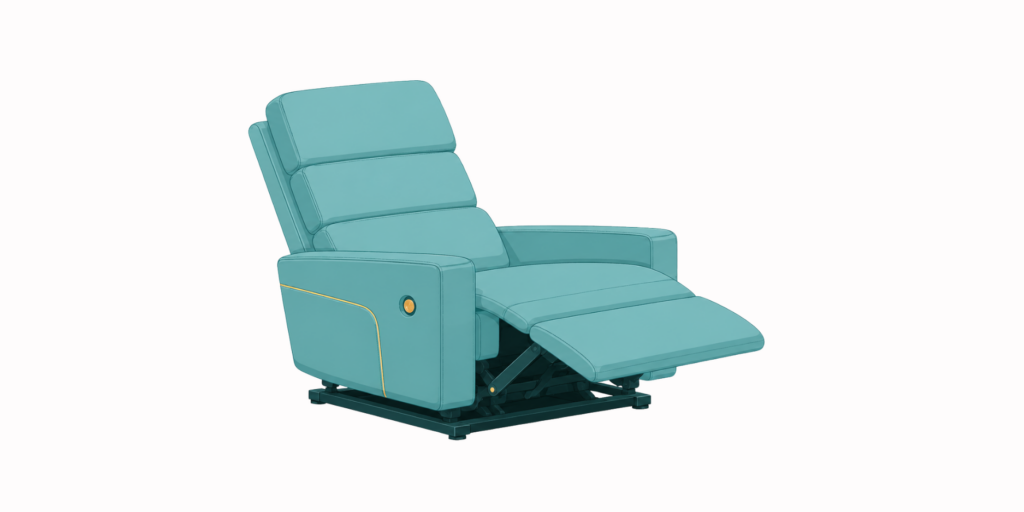
Wall Hugger Recliners
Wall hugger recliners slide forward on the base as they recline instead of tipping backward, so they need only a few inches of clearance behind the chair. For back pain specifically, the benefit is placement rather than the recline mechanism itself, since a wall hugger fits closer to a wall and lets you position the chair nearer a doorway or a spot, which makes standing up easier.
A wall hugger recliner makes sense if you:
- Have a small room or limited clearance behind the chair
- Want to place the recliner near a wall outlet or reading light
- Still need full recline and lumbar support in a smaller footprint
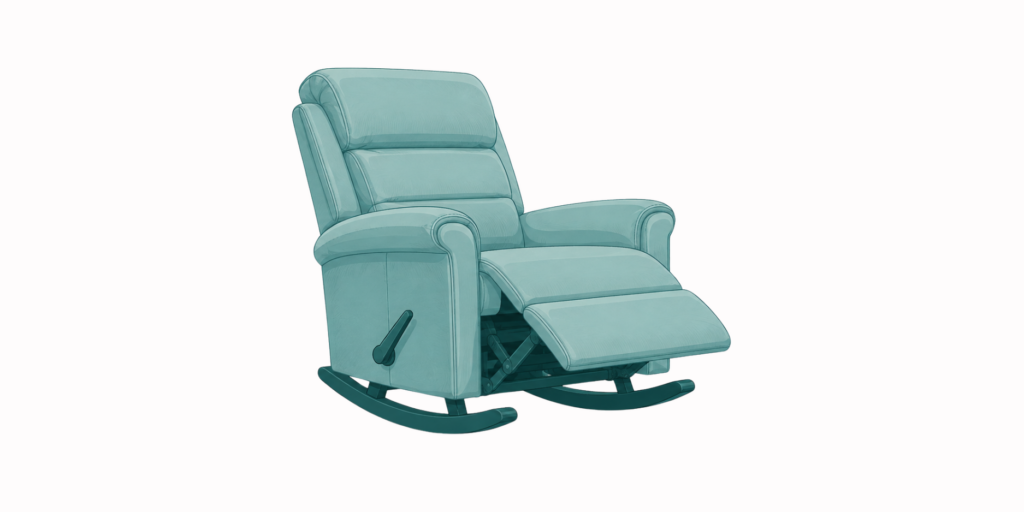
Rocker Recliners
Rocker recliners combine a gentle rocking motion with a standard recline, and many people with back pain find the rocking itself soothing, since small, continuous movement keeps the muscles around the spine from stiffening the way they do in a completely still chair. Rocker recliners typically top out around 130° to 150°, short of the deeper angles zero gravity models reach.
A rocker recliner makes sense if you:
- Want gentle movement rather than a completely still seat
- Have mild to moderate lower back pain, not sciatica or nerve pain
- Prefer a more traditional recliner look and feel
- Plan to use the chair for shorter stretches throughout the day
| Recliner Type | Recline Angle | Best For | Key Feature |
|---|---|---|---|
| Zero Gravity | 120° to 130° | Sciatica, chronic lower back pain, nerve-related pain | Legs raised above heart level for spinal decompression |
| Power Lift | 130° to 170° | Post-surgery recovery, difficulty standing from a low seat | Forward tilt assist to help you stand |
| Wall Hugger | 130° to 160° | Small rooms, limited wall clearance | Slides forward on the base, needs only a few inches behind it |
| Rocker | 130° to 150° | Mild to moderate lower back pain, shorter sitting stretches | Gentle rocking motion keeps back muscles from stiffening |
Matching Back Pain to Recliner Types
Pain location changes which features matter most, the same way sleep position changes which mattress firmness works best. Matching a recliner to where you feel pain, rather than to features you assume are universally best, gets you to the right chair faster.
For Lower Back Pain
Lower back pain responds best to lumbar support and seat depth, since these two features do the most to keep your spine in its natural curve. A strong lumbar bolster paired with a recline angle around 130° to 150° addresses most lower back pain without the cost or footprint of a full zero gravity model.
For Sciatica & Nerve Pain
Sciatica and nerve pain respond best to recline angle and leg elevation, since these determine how much space opens up between your lumbar vertebrae. Zero gravity or power lift recliners reaching 120° to 130° with independent leg support address the nerve compression behind sciatica more directly than lumbar support alone.
For Upper Back & Neck Pain
Upper back and neck pain respond best to headrest adjustability, since a fixed headrest pushes your chin down as the backrest reclines. An independently adjustable headrest keeps your neck aligned through the full recline, which matters more here than seat depth or lumbar contour.
For Hip & Sacroiliac Pain
Hip and sacroiliac pain respond best to cushion firmness and seat width, since these determine how evenly your weight distributes across the seat. Firm cushioning keeps your hips from sinking unevenly, while additional width reduces pressure on the sacroiliac joints where the spine meets the pelvis.
| Where You Feel Pain | Priority Feature | Recommended Recline Angle | Best Recliner Type |
|---|---|---|---|
| Lower Back | Lumbar support and seat depth | 130° to 150° | Rocker or standard power recliner |
| Sciatica & Nerve Pain | Recline angle and leg elevation | 120° to 130° | Zero gravity or power lift |
| Upper Back & Neck | Independently adjustable headrest | 130° to 160° | Power recliner with headrest control |
| Hip & Sacroiliac | Cushion firmness and seat width | 130° to 150° | Wide-seat power or rocker recliner |

Find Your Perfect Recliner at Hudson’s Furniture + Mattress
A recliner built around the way your spine actually rests can turn a chair you tolerate into the most comfortable seat in your home. The right lumbar contour, recline angle, and leg support work together every time you sit down, not just on the days your back happens to feel fine.
At Hudson’s, our selection of recliners spans every type covered here, from zero gravity models built for sciatica to swivel and lift chairs suited to specific back conditions. Visit one of our showrooms to try them in person, or shop online right from the comfort of your home.
FAQs
What is the best recliner for back problems?
The best recliner for back problems combines adjustable lumbar support, a recline angle suited to your specific pain, and a seat depth which lets your knees clear the front edge. Zero gravity and power lift recliners address the widest range of back problems, from general soreness to sciatica.
Are recliners good for sciatica?
Zero gravity recliners, which recline to between 120° and 130° while raising the legs above heart level, are generally the most effective type for sciatica. This position reduces pressure on the lumbar nerve roots behind sciatic pain, though symptoms vary enough from person to person, and anyone with sciatica should ease into a new recline gradually.
What recline angle is best for back pain?
Most guidance points to a range between 130° and 170°, wider than the 90-degree angle in a standard upright chair. Zero gravity recliners push further, to 120° through 130°, while also raising the legs above the heart for additional relief.
What is the difference between a zero gravity recliner and a power lift recliner?
A zero gravity recliner focuses on a specific recline angle and leg elevation designed for spinal decompression. A power lift recliner focuses on tilting forward to help you stand, and many power lift models also include a zero gravity setting once you’re seated.
How do I know if a recliner has good lumbar support?
Sit all the way back in the chair and check whether the lumbar cushion meets the curve of your lower back with no gap. Recliners with adjustable lumbar bolsters let you raise or lower the support to match your own spine, worth prioritizing over a fixed cushion.